

How Do Tank Structure and Coating Affect Water Safety and Durability?

In Africa and other urbanizing areas, water storage infrastructure plays a critical role in public health, industrial productivity, and climate resilience. Yet, the problem rarely lies in capacity, water sources, treatment or placement. It comes down to two overlooked aspects of water safety; tank structure and coating. The design of steel water storage tanks specifically tank structure and coating, directly influence corrosion resistance, water quality, durability, and maintenance costs.

Poorly designed water tanks can contaminate water, develop leaks, and structural deformation that pose health risks and long term maintenance costs. Pressed panel steel water tanks are designed to be safe, hygienic, durable, resist corrosion, and be applicable for commercial, residential, and industrial use.

As water safety standards tighten and durability expectations rise, understanding how a tank is built and protected has become critical. This article examines how tank structure and coating influence water quality, safety, and durability, and why pressed panel steel water tanks manufactured by Zenith Steel Fabricators Ltd are emerging as the gold standard in modern water storage solutions.

Understanding steel water tank structure: the foundation of water safety​

A modern steel water tank is more than a container, the structural integrity of a steel water tank determines:

  • Its ability to withstand internal water pressure
  • Resistance to environmental exposure such as winds, seismic loads, temperature fluctuations
  • Protection against deformation or collapse
  • Long-term water containment without leakage or contamination

A weak structure compromises water quality even before coating is considered. While plastic and concrete water tanks are widely used, pressed panel steel water tanks offer distinct structural advantages:

  • Modular tank installations on ground, rooftop or steel towers
  • Custom-fit with capacity range between 5,000 litres and 1,000,000 litres
  • Superior quality and durability

Structural design and load management​

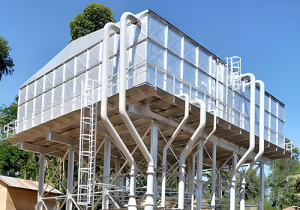
Elevated metal water storage tankMillimetre-precision in steel water tanks fabrication determines how well a tank resists leakage and deformation. Zenith Steel’s high quality steel water tanks incorporate:

  • CNC-pressed, cut, and punched mild steel panels ranging from 4mm to 6mm depending on tank depth and volume
  • Tight sealing between joints to distribute hydrostatic pressure evenly
  • Roof cover of 1.5mm thickness to protect against debris and contamination

These features are important for industrial water storage, municipal water tanks, and elevated steel water towers, where failure can result in massive losses. Water exerts pressure on tank walls and bases. Poorly designed water tanks experience:

  • Bulging under water pressure
  • Deformation due to environmental stress
  • Seam failures from repeated filing and emptying 
 

Tank structure goes beyond the tank itself, it includes how the tank is supported. Zenith Steel designs steel water tanks installation on:

  • Elevated steel towers – Fabricated using I-beams, 2.1 mm chequered plates, with perimeter walkways and handrails.
  • Ground support – Using I-beams or reinforced concrete bearer beams.
  • Rooftop platform – Engineered to distribute load safely without compromising building integrity.

A well-designed support system prevents uneven loading, structural fatigue, and premature failure; key factors in long-term water safety.

How tank coating protects water quality​

Steel alone is strong, but unprotected steel corrodes. Water, especially untreated or mineral rich water, is highly corrosive to bare steel. Coating protects tanks from:

  • Microbial growth that contaminate water
  • Corrosion and rust
  • Premature failure as structural thickness reduces over time
 

The right coating protects both the steel and the water it stores. Zenith Steel applies two protection options:

    a) Galvanized coating

This is one of the most effective protection methods where steel panels are dipped into molten zinc (hot-dip galvanizing). Its benefits include:

  • Provides sacrificial protection against corrosion
  • Reduced maintenance requirements
  • Ideal for portable water storage
  • Uniform coverage across panels and joints to ensure water safety

Zenith Steel’s water tanks utilize high-grade galvanized steel sheets that offer consistent corrosion resistance.
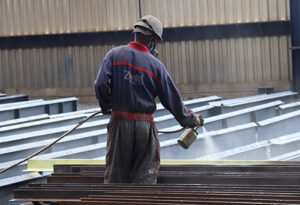
   

Airless painting at zenith steel fabricators ltd

b) Paint-based corrosion protection

Where additional protection is required, Zenith Steel applies multi-layered paint systems. They include:

  • Internal coating – 1 coat of primer and 2 coats of bituminous paint that is safe for water storage.
  • External coating – 1 layer of primer and silver aluminium paint for UV protection and weather resistance.

These paint-based coating keep the interior from rusting and make the exterior resistant to harsh weather conditions. Zenith Steel’s water storage tanks are low-maintenance and preserve water-purity.


How tank structure and coating work together​

  1. Structural integrity extends coating life – Even the best coating fails if the underlying structure deforms. Well-engineered steel water tanks minimize structural movement that cause micro-cracks in coating to ensure better coating adhesion and longevity.
  2. Coating preserves structural strength – Effective coating maintains wall thickness, preserves load bearing capacity, and prevents corrosion thinning.
  3. Prevent contamination – Sealed joints prevent the growth of harmful bacteria and ensure structural stability under pressure.
  4. Ensure climate resilience and water security – With climate change impact across Africa, durable steel water tanks with advanced coatings provide the highest quality water security for climate-resilient water systems.

Conclusion​

Water safety does not start the moment you open the tap, it starts at the tank. The right water tank design makes a difference especially as Africa is expanding water infrastructure to meet the urbanization, industrial growth, and climate resilience objectives. With projects in over 15 countries across Africa, Zenith Steel Fabricators continues to lead in fabrication of durable water storage solutions.

If you want a safe and durable engineered water storage solution, you can get custom-made steel water tanks from Zenith Steel Fabricators that are designed to last.

Call: +254 722 205 902/ +254 733 555 281

Email: sales@zenithsteel.com

Visit: https://www.zenithsteel.com

Zenith Steel – You Dream It, We Make It.

Frequently Asked Questions

What materials are commonly used for water tank coatings?

Common coatings include food-grade epoxy, polyurethane, and hot-dip galvanization. These coatings protect the tank from corrosion and ensure water remains safe for consumption.

How does tank structure affect water quality?

The structural design determines resistance to pressure, environmental stress, and contamination. Properly engineered tanks with sealed joints maintain water quality far longer.

How often should steel water tanks be inspected?

At least once a year for signs of corrosion, coating degradation, or structural fatigue. Tanks in harsh environments may require more frequent inspections.

Can steel tanks be used for potable water storage?

Yes, steel tanks with appropriate food-grade coatings are widely used for potable water storage, complying with local health and safety standards.

Leave a Reply

Your email address will not be published. Required fields are marked *