

Multi-Storey Steel Buildings for Mozambique’s Commercial and Hospitality Development Boom
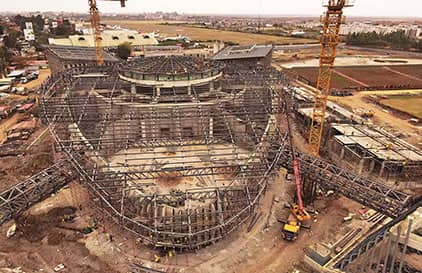
Mozambique is experiencing a commercial property boom driven by its LNG mega-projects, growing tourism sector, and expanding urban economies in Maputo and Beira. Property developers and hotel investors are seeking construction solutions that deliver speed, design flexibility, and competitive costs. Structural steel for multi-storey buildings offers all three – with faster construction timelines, lighter foundations, open-plan floor plates, and long-term adaptability.
What’s Driving Commercial Construction in Mozambique
Mozambique’s Rovuma Basin LNG developments are among the largest energy projects in Africa, attracting international investment and creating demand for offices, hotels, residential compounds, and commercial centres in Maputo, Beira, and the northern provinces. Simultaneously, the tourism sector along Mozambique’s Indian Ocean coastline is growing, driving demand for hospitality construction.
This activity is creating a pipeline of multi-storey commercial projects that need to be delivered on tight timelines and competitive budgets. Understanding the factors that affect steel structure costs is essential for project planning.
Why Structural Steel
Speed to Market
Steel-framed buildings are fabricated off-site and assembled rapidly on location. This approach aligns with the growing use of pre-engineered building systems across the continent. For developers looking to capture market demand quickly, this speed advantage translates directly to earlier rental income or operational revenue.
Coastal Conditions
Mozambique’s coastal cities are exposed to salt air, high humidity, and cyclone risk. Steel structures can be designed with appropriate corrosion protection and engineered for wind loads, providing resilient buildings for the coastal environment.
Design Flexibility
Hotels, offices, and mixed-use developments benefit from steel’s large column-free spans and adaptable floor plates. Interior layouts can be configured and reconfigured over the building’s lifecycle without affecting the structural frame.
Lighter Foundations
Coastal soil conditions in Maputo and Beira can be challenging. Steel’s lighter weight reduces foundation depth and cost – a significant saving on sites with sandy or waterlogged ground.
Key Considerations
- Corrosion protection: specify marine-grade coatings for coastal locations
- Wind engineering: design for cyclone loads as per Mozambican building codes
- Fire protection: intumescent coatings or board encasement
- Regulatory compliance: ensure designs meet Mozambican building standards
Cost Factors
- Number of storeys and gross floor area
- Structural specification (wind and seismic loads)
- Corrosion protection specification
- Facade and cladding design
- Foundation design
- Transport and logistics to Mozambique
Structural Steel vs Reinforced Concrete: At a Glance
For multi-storey commercial buildings, both structural steel and reinforced concrete are widely used. Here is how they compare for developers in East Africa:
| Factor | Steel Frame | Alternative |
|---|
Erection speed: Steel: Fast – frame erected in weeks, not months – Concrete: Slow – each floor requires formwork, pour, and curing
Floor plate flexibility: Steel: Wide column-free spans – open-plan floors – Concrete: Shorter spans, more columns, less flexibility
Foundation loads: Steel: Lighter structure – smaller foundations – Concrete: Heavy – requires substantial foundations
Seismic performance: Steel: Ductile – absorbs seismic loads by flexing – Concrete: Brittle unless specially designed and reinforced
Fire protection: Steel: Requires intumescent coating or encasement – Concrete: Inherent fire resistance
End of life: Steel: Fully recyclable – structural steel retains value (see recyclability of steel) – Concrete: Difficult to repurpose or recycle
Why Zenith Steel for Multi-Storey Buildings in Mozambique
Zenith Steel Fabricators delivers structural steelwork across 14 African countries including Mozambique. With an annual capacity of 40,000 metric tonnes, Zenith handles multi-storey commercial projects for developers operating in Maputo, Beira, and other Mozambican cities.
Contact Zenith Steel to discuss your commercial building project in Mozambique.
Related Articles
- How Castellated Beams Improve Structural Efficiency in Modern Steel Construction
- What Factors Affect the Cost of Steel Structures in Kenya?
- Why Pre-Engineered Buildings Are Taking Over the Construction Sector
- Africa’s Growing Demand for Steel: Opportunities and Challenges
- Safety in Steel Fabrication: Structural Steel Safety Standards
Frequently Asked Questions
Can steel buildings withstand cyclones?
Yes. Steel structures can be engineered for the wind loads associated with cyclone-prone regions. The design must account for the specific wind conditions of the project location.
Does Zenith deliver to Mozambique?
Yes. Zenith Steel erects structural steelwork across Mozambique.
How does coastal climate affect steel buildings?
Salt air accelerates corrosion if not properly addressed. Marine-grade coatings and galvanising provide effective protection for steel structures in coastal environments.
Does Zenith Steel work with architects and structural engineers on multi-storey projects?
Yes. Zenith Steel works alongside the project architect and structural engineer throughout the design and construction process. The earlier Zenith’s fabrication team is engaged, the better the coordination between structural intent and practical fabrication and erection requirements.
How does Zenith Steel handle fire protection for multi-storey buildings?
Fire protection for structural steelwork is a critical component of any multi-storey project. Zenith works with the project’s fire consultant to specify and apply the appropriate fire protection system – intumescent coatings, board encasement, or spray-applied protection – depending on the building’s fire engineering requirements and local building regulations.