Understanding CNC Cutting, Drilling & Welding in Modern Steel Fabrication

automation: CNC IN steel fabrication

The steel fabrication industry is evolving faster than ever, driven by automation, data, and precision engineering. Traditional steel fabrication methods, while effective in the past, often struggle to keep up with modern demands for speed, precision and scalability. 

Across East Africa, projects are becoming more complex, from multi-storey buildings and plate girder bridges to factories, steel water tanks and warehouses. These projects require fabrication processes that deliver consistency at scale. This is where CNC cutting, drilling and welding in modern steel fabrication step in enabling faster production, improved safety, reduced waste, and unmatched accuracy.

By integrating computer-controlled automation with advanced design systems, fabricators can now achieve unmatched precision, faster production timelines, improved safety, and reduced material waste.

For leading fabricators such as Zenith Steel Fabricators Ltd with projects in over 15 countries across Africa, CNC fabrication is a strategic advantage shaping the future of steel fabrication in East Africa.

The Shift Toward Automated Steel Fabrication

Historically, steel fabrication relied heavily on manual measurement, cutting, and assembly. While craftsmanship remains vital, manual methods often resulted in:

  • Longer production times
  • Higher error margins
  • Increased material waste
  • Safety risks for workers
 

Today, modern steel fabrication technology powered by CNC machines are redefining what is possible. Modern fabrication plants now use digital design software, automated machines, and real-time data integration to produce steel structures with millimeter-precision.

Why this matters for the construction sector

Across East Africa, infrastructure demand is rising rapidly. Developers require:

  •    Speed
  •    Precision
  •    Scalability
  •    Cost efficiency
 

CNC in steel fabrication directly addresses these needs by enabling faster project delivery, reduced on-site work, and improved structural reliability.


What is CNC in steel fabrication

CNC (Computer Numerical Control) refers to machines that follow computer-generated instructions to perform manufacturing tasks automatically. In steel fabrication, CNC systems read digital drawings often from BIM or Tekla and execute precise operations such as:

  • Cutting steel plates and beams
  • Drilling bolt holes and connection points
  • Welding components into finished structures
 

This integration ensures that digital designs translate seamlessly into physical structures with millimetre-precision. At Zenith Steel’s automated fabrication facility, these technologies work together to produce high-quality structural steel components at scale.

Modern fabrication begins long before machines start cutting steel. Design software such as BIM and Tekla enables:

  • 3D modeling of entire steel structures
  • Early detection of design conflicts
  • Accurate cost and timeline estimates
 

The design is translated into machine-readable instructions. CNC equipment reads this data directly, eliminating manual interpretation errors. These design models define:

  • Dimensions
  • Load requirements
  • Connection details
  • Material specifications
 

When integrated with CNC machines, digital designs move seamlessly from concept to production.

a) CNC Cutting: Precision at the Foundation of Every Structure

  1. What is CNC Cutting?

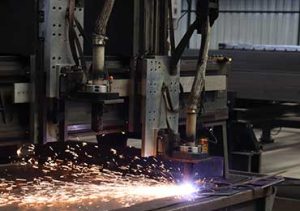
Plasma Cutting Universal Beams, Castellated Beams & Plates

                                                                                                 Plasma Cutting

CNC cutting uses computer-guided machines to cut steel components according to exact digital specifications. Common CNC cutting technologies include:

  • Plasma cutting
  • Laser cutting
  • Oxy-fuel cutting
 
At Zenith Steel, plasma cutting forms the backbone of precision steel manufacturing.
 

Key benefits of CNC cutting

  •          Unmatched Accuracy

Manual cutting can introduce human error. CNC machines operate with precision down to fractions of a millimetre, ensuring structural integrity.

  •      Faster Production Cycles

Automation dramatically reduces cutting time, enabling fabricators to handle large-scale projects efficiently.

  •       Reduced Material Waste

Digital optimization allows fabricators to plan cuts strategically, maximizing material usage and reducing costs.

  •       Consistency Across Projects

Every piece is identical to the design file, ensuring consistency across entire projects.

Why this matters for developers: For large projects like plate girder bridges, precision cutting ensures seamless assembly on-site, reducing delays and rework.

b) CNC Drilling: The Backbone of Structural Connections

Why drilling precision matters

Steel structures rely on thousands of bolts and connections. Even small misalignments can cause:

  • Structural weakness
  • Assembly delays
  • Increased costs
 

CNC drilling eliminates these risks.

How CNC drilling works
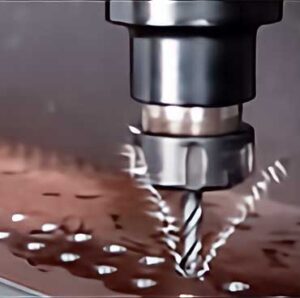
Drilling - Service center - Universal Beams, Castellated Beams & Plates

Automated drilling machines read digital models and drill holes exactly where required.

Key advantages

  1. Perfect Alignment

CNC drilling ensures bolt holes align perfectly during installation, improving structural stability.

  1. Faster Assembly on Site

Pre-drilled components reduce installation time significantly.

  1. Improved Safety

Reduced need for manual drilling lowers workplace risks.

  1. Scalability

Large batches of components can be produced quickly without compromising accuracy.

Common Applications

  • Steel frames and trusses
  • Connection plates and brackets
  • Prefabricated building components

For companies like Zenith Steel Fabricators, CNC drilling ensures that structural steel arrives on-site ready for efficient assembly.

c) Welding: Strength Meets Automation

The role of welding in steel fabrication

Welding is the process that binds steel components into strong, load-bearing structures. While traditional welding relies heavily on manual expertise, modern fabrication incorporates automated and CNC-controlled welding systems. 
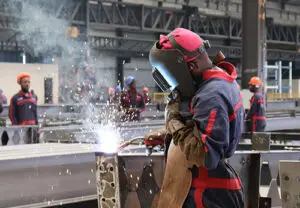
Welding at zenith steel fabricators ltd

Modern Welding Techniques

  • Automated beam welding
  • CNC-controlled welding lines
  • High-strength structural welding processes

Each component undergoes strict inspection to meet engineering and safety standards.


Benefits of CNC welding

While skilled welders remain essential, CNC welding adds:

  1. Consistent Weld Quality

Automated welding eliminates variations that can occur with manual welding.

  1. Increased Structural Strength

Uniform welds improve load-bearing capacity and durability.

  1. Faster Production

Automation allows continuous welding operations with minimal downtime.

  1. Reduced Rework

Consistent weld quality reduces the need for repairs and inspections.

The Strategic Impact of CNC in steel fabrication efficiency

While skilled craftsmanship remains important, automation delivers measurable advantages.

  1. Shorter Project Timelines

Automated fabrication accelerates production and reduces on-site delays.

  1. Lower Project Costs

Reduced waste, fewer errors, and faster installation translate to significant cost savings.

  1. Improved Sustainability

CNC fabrication optimizes material usage and reduces energy consumption.

  1. Better Quality Assurance

Digital tracking ensures each component meets strict quality standards.

Zenith Steel Fabricators Ltd operates one of the region’s most advanced automated fabrication plant, integrating CNC cutting, drilling, and welding into a fully digital workflow. With automation a strong focus on precision steel manufacturing and modern fabrication processes, Zenith Steel delivers:

  • Structural steelworks
  • Multi-storey steel buildings
  • Steel bridges and warehouses
  • Water tanks and industrial structures
 

Companies investing in CNC steel fabrication technologies today are positioning themselves as leaders in tomorrow’s construction ecosystem.

Conclusion

The demand for faster, safer and more efficient construction continues to grow. CNC cutting, drilling, and welding are transforming steel fabrication into a high-precision, data-driven industry. For industry leaders like Zenith Steel Fabricators Ltd, CNC in steel fabrication is central to delivering world-class steel solutions across East Africa.

Planning a construction or infrastructure project? Contact the team today to discuss your project requirements and experience the future of steel construction.

Frequently Asked Questions

What is CNC cutting in steel fabrication?

Automated machines guided by digital designs to cut steel with extreme precision using plasma, laser, or oxy-fuel methods.

How does CNC drilling improve accuracy?

Millimetre-level precision eliminates manual layout work and ensures components fit correctly.

What welding techniques are used in modern fabrication?

MIG, TIG, and submerged arc welding, with CNC-guided robotic welding for consistency.

Why is CNC fabrication important?

Ensures exact specifications, reducing waste, rework, and on-site modification.

Leave a Reply

Your email address will not be published. Required fields are marked *