

Africa's Steel Demand: South Sudan Opportunities & Reconstruction

Across Africa, infrastructure investment, industrial expansion, and urban development continue to reshape the outlook for steel consumption. From transport corridors and energy facilities to commercial buildings and humanitarian reconstruction, demand for structural steel is becoming increasingly tied to regional growth strategies.

South Sudan is one market where this shift is becoming particularly visible.

Oil-field rehabilitation in Unity and Upper Nile, donor-backed reconstruction across the Equatoria, commercial expansion in Juba, and renewed agricultural investment are creating sustained demand for structural steel, prefabricated buildings, warehouses, and industrial steel systemsYet in South Sudan, opportunity is defined not only by demand, but by logistics, fabrication readiness, and engineering execution.

For regional manufacturers such as Zenith Steel, the market presents a clear case for precision detailing, and transport-optimized steel solutions built for challenging operating environments.

What Is Driving Steel Demand in South Sudan?

The conversation around Africa steel demand South Sudan is increasingly linked to four major construction and infrastructure sectors:

  • Oil-field infrastructure – The oil-producing regions of Unity State and Upper Nile State remain among the largest drivers of fabricated steel demand in South Sudan.
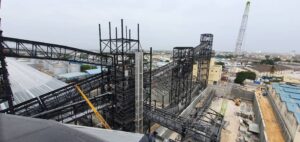
maize factory


As production facilities undergo renewal and supporting infrastructure expands, demand grows for steel systems that can be fabricated regionally, transported efficiently, and assembled quickly on site.

In these environments, engineering requirements extend beyond simple structural performance. Corrosion protection, modular detailing, hazardous-area suitability, and rapid installation all become critical project considerations.

  • Donor and humanitarian reconstruction – South Sudan’s reconstruction pipeline continues to generate substantial demand for prefabricated steel structures.

    Humanitarian agencies, NGOs, and development partners increasingly require buildings that can be deployed quickly with minimal on-site fabrication complexity.

  • Commercial real estate in Juba – Juba’s commercial footprint continues to evolve alongside wider regional economic activity. Cities such as Wau, Malakal, Bentiu, and parts of the Equatoria also contribute to a broader construction ecosystem. As businesses expand logistics, storage, and operational capacity, structural steel South Sudan requirements increasingly favour systems that combine durability, speed of installation, and adaptable layouts.  Pre-engineered steel buildings are particularly suited to this demand profile.
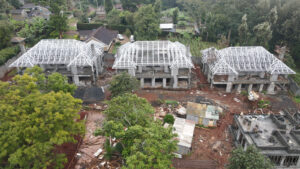
 
  • Agricultural revival in the Equatorias –  Agriculture remains an important component of South Sudan’s long-term economic recovery.

    As production cycles stabilize across parts of Eastern and Central Equatoria, demand is returning for:

    • Grain storage facilities
    • Agro-processing sheds
    • Steel water infrastructure
    • Irrigation support structures
    • Equipment housing and workshops
     

    These projects reinforce a broader trend across steel fabrication Africa markets: industrial and agricultural infrastructure increasingly relies on adaptable, cost-efficient steel construction systems.

What South Sudan's Steel Demand Means for Regional Fabricators

One of the defining realities of the South Sudan market is this: demand is growing but logistics often determine project success. Most steel entering South Sudan travels through regional supply routes linking Mombasa, Kampala, Nimule, and Juba. That supply chain creates cost, scheduling, and handling pressures that influence how steel should be designed, fabricated, and delivered.

For regional manufacturers, this changes the operating model. At Zenith Steel, project planning typically emphasizes three principles for logistics-sensitive markets.

       1. Fabricate Before Shipping

The economic advantage lies in transporting finished structural packages rather than raw stockDetailing, cutting, drilling, welding, and finishing are completed before dispatch.
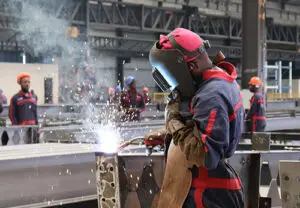
Welding at zenith steel fabricators ltd

What reaches site is a coordinated installation package designed for efficient assembly. This approach helps reduce:

  • On-site fabrication delays
  • Equipment dependency
  • Labour constraints
  • Rework risk
 

        2. Prioritize Bolt-Up Steel Design 

Field welding can present operational challenges in remote or infrastructure-constrained locations. A design strategy centred on bolted steel connections allows for:

  • Faster erection
  • Reduced power requirements
  • Simplified assembly sequencing
  • Lower dependence on specialized site welding teams
 

Using advanced modelling workflows such as Tekla detailing, connection systems can be optimized for transport, handling, and installation efficiency before fabrication begins.

        3. Build for Harsh Operating Conditions

South Sudan’s operating environments place significant demands on steel performance. Protective finishing systems become especially important for:

  • Oil and industrial infrastructure
  • Ground-contact components
  • External exposure environments
  • Long-life commercial facilities
 

Hot-dip galvanizing and engineered coating systems help strengthen durability, corrosion resistance, and maintenance performance across demanding project applications.

The Northern Corridor Advantage: Why Logistics Shape Steel Projects

The Mombasa–Kampala–Nimule–Juba corridor remains one of the most important supply routes supporting South Sudan infrastructure development.

But successful project delivery involves more than simply moving steel across borders. It requires integrated planning around:

  • Transport dimensions
  • Fabrication sequencing
  • Documentation readiness
  • Quality assurance reporting
  • Installation logic
 

At Zenith Steel, logistics planning begins during the detailing phase, not after fabrication is complete. Steel members are designed around realistic transport logistics, assembly phases, and site installation strategy.

That alignment helps reduce avoidable delays, minimize handling inefficiencies, and improve delivery predictability for regional projects.

Why Regional Steel Fabrication Matters in South Sudan’s Reconstruction Economy

South Sudan’s reconstruction story is closely tied to a larger African infrastructure narrative. Energy renewal, humanitarian rebuilding, commercial development, and agricultural investment are all strengthening the outlook for Africa steel demand South Sudan.

But the market increasingly rewards suppliers that can deliver more than steel tonnage alone. Success depends on:

  • Engineering accuracy
  • Regional fabrication capability
  • Logistics-aware design
  • Fast assembly systems
  • Durable protective finishes
  • Reliable project documentation
 

For contractors, developers, NGOs, and infrastructure stakeholders operating in South Sudan, regional fabrication offers a practical path toward faster, more coordinated project delivery.

Conclusion

South Sudan’s infrastructure and reconstruction pipeline continues to create meaningful opportunities for structural steel fabrication in East Africa.

From oil-field facilities and logistics warehouses to schools, clinics, agricultural systems, and commercial buildings, demand patterns point toward one clear requirement: efficient, transport-ready, precision-fabricated steel solutions.

Looking for structural steel solutions for South Sudan or regional African infrastructure projects? Contact Zenith Steel Fabricators Ltd to discuss your project requirements or request a quotation today.

Frequently Asked Questions

 i) What is the typical road transit from Nairobi to Juba?

Around 10 to 14 days door-to-site via the Northern Corridor (Nairobi, Eldoret, Malaba, Kampala and Nimule), depending on rainy-season road conditions on the Ugandan and South Sudanese sections. In our South Sudan deliveries, dry-season runs sit at the lower end of that band and rainy-season runs at the upper end.

 ii) Has Zenith Steel supplied UN agencies and donor programmes for South Sudan?

Yes. We have supplied prime contractors on multiple humanitarian and donor builds in South Sudan, with stamped engineering drawings, ISO 1461 hot-dip galvanising certification and an SSNBS-ready delivery dossier on every load. The work spans pre-engineered warehouses, school and clinic frames, and shelter superstructures.

 iii) Can Zenith pre-erect modules in Nairobi for a South Sudan site?

Yes. Small modules pre-bolted in our Nairobi works cut on-site labour by a meaningful margin and shorten the erection programme, particularly for oil-field service buildings on the Unity and Upper Nile blocks where field-welding logistics are difficult. The Tekla model carries module breakdowns as a fabrication phase.

 iv) What coating specification do you use for South Sudan oil-field work?

Hot-dip galvanising to ISO 1461:2022 is the standing default on every member, with film-thickness readings logged per coupon. For fuel-bund frames, pipe-rack baseplates and other prolonged ground-contact exposure on Bentiu, Paloich and the wider Unity and Upper Nile sites, we add a zinc-rich epoxy topcoat over the galvanising.

Leave a Reply

Your email address will not be published. Required fields are marked *