

How to Choose the Best Steel Fabricators in Kenya: A Practical Guide for Developers and Industrial Projects
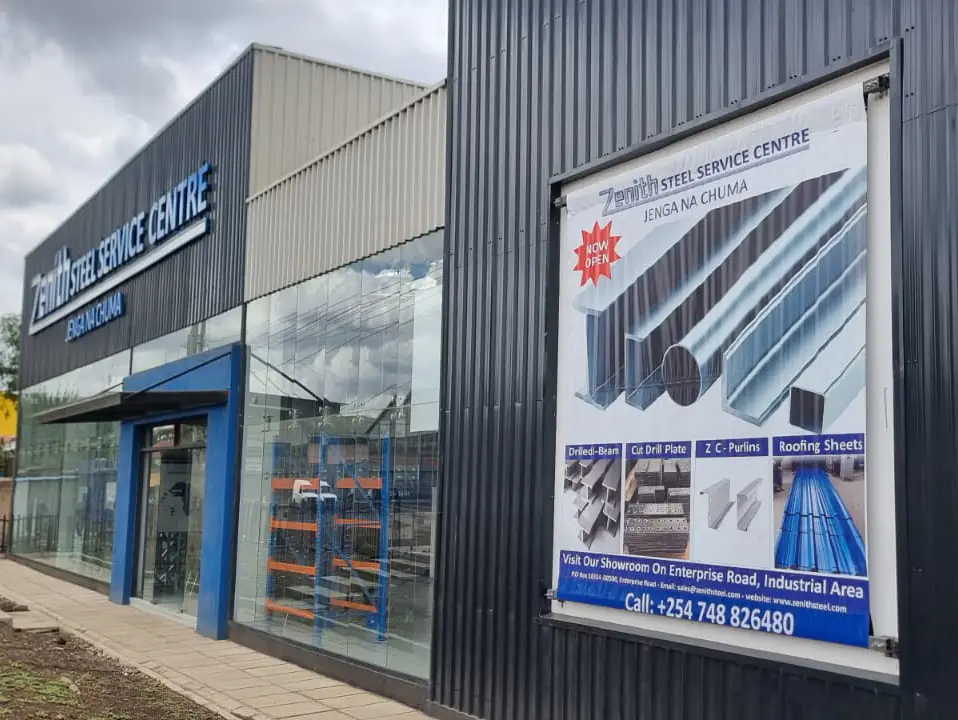
Across Kenya’s construction and industrial landscape, structural steel has become central to how modern infrastructure is designed and delivered. From logistics warehouses in Nairobi’s industrial corridors to manufacturing facilities in Athi River, and large-scale institutional installations across the country, steel structures now define speed, durability, and scalability in project delivery.
However, project outcomes rarely depend on steel alone. They depend on the capability of the fabrication partner behind it. For developers, EPC contractors, architects, and project managers, selecting the best steel fabricators in Kenya is therefore a technical and commercial decision. It requires structured evaluation beyond pricing, anchored in engineering capability, production systems, compliance, and proven delivery history.
This guide outlines the key dimensions that define high-performance structural steel fabrication in Kenya and how to evaluate suppliers before contract award.
What Defines the Best Steel Fabricators in Kenya
The term “best” in steel fabrication is not absolute. It is determined by project fit, technical capability, and execution reliability.
In the Kenyan market, leading steel fabrication companies typically differentiate themselves across the following:
- Engineering and detailing depth — High-performing fabricators operate with in-house structural engineers and detailers using tools such as Tekla Structures or advanced AutoCAD systems. Outsourced detailing, by contrast, often introduces delays and design inconsistencies.
- Workshop capacity — Modern steel fabrication depends on industrial-scale equipment rather than manual processes. Key indicators include CNC cutting technology and beam line drilling.
- Coating and corrosion control — Kenya’s environmental diversity, from coastal humidity to inland industrial zones, makes corrosion protection a critical design consideration. Failure to properly include corrosion protection significantly reduces structural lifespan.
- Compliance — Key standards include ISO 9001 quality management systems, National Construction Authority (NCA) registration, BS EN structural standards, and DOSHS safety compliance.
- Installation and erection — Leading fabricators provide integrated service from fabrication and pre-assembly, transport logistics coordination to structural alignment and inspection support.
- Project history — completed works of comparable scale and complexity.
Why Local Fabrication Beats Imports for Most Kenyan Projects
While imported steel structures may appear cost-competitive at quotation stage, total project cost often tells a different story.
Imported systems typically introduce:
- Extended lead times due to shipping and customs clearance
- Additional inland transport costs from Mombasa
- Installation delays due to unfamiliar design standards
- Limited flexibility for design modifications
Local steel fabrication in Kenya offers several operational advantages:
- Faster production and delivery cycles
- Site-specific structural adaptation
- Lower logistics complexity
- Easier quality verification and inspection
- Direct engineering coordination during execution
For most mid-to-large scale projects, local fabrication provides stronger lifecycle value and lower execution risk.
Six Questions to Ask Every Steel Fabricator in Kenya Before You Sign
A structured evaluation process reduces project risk significantly. Developers and contractors should assess suppliers using the following framework:
1. Can we see the workshop and a current project on site?
A credible fabricator should allow access to their workshop facilities. You want to see beam-line saws, CNC plasma cutters, overhead cranes, painting bays and an active welding floor, and confirm that welders are tested and certified. Restricted access or incomplete facilities are early warning indicators.
2. Who does your structural detailing?
Clarify who produces structural drawings Tekla Structures or AutoCAD. Strong fabricators retain internal engineering teams to ensure faster revision cycles and tighter coordination between the engineer of record, the fabricator and the site team.
3. What is your hot-dip galvanizing arrangement?
Corrosion is the silent cost of any Kenyan steel structure, especially within 50 kilometres of the Indian Ocean coast and around the mineral water of Lake Magadi. Galvanizing to BS EN ISO 1461 gives a measured zinc coating that protects steel for decades. Confirm whether the fabricator owns the galvanizing bath or has a standing arrangement with a Kenyan galvanizer.
4. What is your real lead time, and how do you manage delays?
Ask for typical lead times by tonne, then ask what happens when a delay occurs. Look for contingencies built into the programme, a defined escalation path, and a willingness to commit to liquidated damages where appropriate.
5. Which Kenyan projects of a similar size have you completed?
Ask for two or three reference projects in your sector and your size band: a 2,000 square metre warehouse, a six-storey commercial block, a 250,000-litre water tank. A serious fabricator will share project addresses and contact persons.
6. Are you registered and certified?
Check for National Construction Authority (NCA) registration, DOSHS compliance, KEBS conformity for standard products, and ISO 9001 quality management. Ask to see certificates rather than rely on marketing claims.
Match the Fabricator to the Project
Use these categories to filter your shortlist quickly.
- Light commercial and residential – Mezzanines, light-frame retail, small workshops. Cold-formed sections and light gauge steel framing, typically 30 to 100 tonnes per month.
- Heavy structural for industrial and multi-storey work – Sugar factories, cement plant expansions, multi-storey buildings, large warehouses. CNC beam lines, submerged-arc welding, 300+ tonnes per month.
- Water storage and pressed-panel steel tanks – Sectional tanks for industrial, food-grade or potable supply. Verify panel thickness against the specified head of water.
- Warehouse storage systems – Selective pallet racking, drive-in racks, cantilever racking and mezzanines, modelled per EN 15512.
- Solar and renewable-energy steel – Ground-mounted solar racks, agri-PV structures and pump-shelter frames; consistent dimensional tolerance matters most.
How Zenith Steel Approaches Kenyan Projects
Zenith Steel Fabricators Ltd has operated from Nairobi since 1977, with structural steel projects completed across Kenya and 14 further African markets. Our workshop combines CNC plasma cutting, beam-line drilling and sawing, automatic welding lines and a Tekla Structures detailing team.
Typical Kenyan commissions include:
- Multi-storey commercial buildings in Nairobi with composite steel-and-concrete floor systems.
- Industrial warehouses across the Athi River, Mlolongo and Ruiru corridors.
- Pressed-panel Zen Tanks steel water tanks for institutions, factories and agricultural sites.
- Pallet racking and warehouse storage for logistics operators in Nairobi and Mombasa.
- Light gauge steel frames for residential and small commercial structures.
Our team handles design coordination, fabrication, galvanising, transport and on-site erection. For full detail see our products and services overview or our structural steelworks page.
Cost Analysis: Understanding Real Value in Steel Fabrication Quotes
Price per kilogram remains one of the most misunderstood metrics in steel procurement.
Lower-cost quotations often exclude critical components such as:
- Structural coatings or galvanizing
- On-site erection and cranes
- Connection hardware and anchors
- Engineering detailing and approvals
- Transport and logistics costs
A realistic cost comparison should evaluate:
- Total installed cost per structure
- Compliance with specification standards
- Lifecycle maintenance requirements
- Risk exposure due to shortcuts in fabrication
In many cases, the lowest initial quote becomes the highest total cost over the project lifecycle.
For more on cost drivers, see our explainer on what factors affect the cost of steel structures in Kenya.
Common mistakes in Steel Fabrication Procurement
Several warning signs consistently correlate with project risk:
- Lack of physical workshop verification
- Inability to provide comparable project references
- Missing or expired compliance certifications
- Quotes that exclude installation or coating systems
- No named structural engineering oversight
- Poor documentation of safety systems
These indicators often reflect structural weaknesses in operational capacity.
Frequently Asked Questions
i) Who are the leading structural steel fabricators in Kenya?
Kenya hosts a competitive group of established structural steel fabricators concentrated around Nairobi, Mombasa and Kisumu. Evaluate fabricators on workshop capacity, in-house detailing, ISO 9001 certification, project history and willingness to host a site visit. Zenith Steel has fabricated structural steel for Kenyan clients since 1977 and operates from Nairobi.
ii) How do I verify a steel fabricator is registered in Kenya?
Ask for National Construction Authority (NCA) registration, KEBS conformity certificates for any standard products, and ISO 9001 or equivalent quality certificates. DOSHS maintains records of registered workplaces. A serious fabricator will share documentation without resistance.
iii) How much does steel fabrication cost per kilogramme in Kenya?
Unit rates vary by section type, coating system, fabrication complexity and project size. Fabricated and galvanised structural steel delivered to a Nairobi site typically runs into the low hundreds of Kenyan shillings per kilogramme. Always price on tonnage and a full bill of quantities rather than a single unit rate.
iv) Which Kenyan standards apply to structural steel fabrication?
Kenyan projects commonly reference BS EN 1090 for execution of steel structures, BS EN ISO 1461 for hot-dip galvanising, and KS ISO 9001 for quality management. Kenya Building Code requirements and county-level approvals also apply, alongside the Occupational Safety and Health Act for site work.
v) Can a Kenyan fabricator handle multi-storey steel buildings?
Yes. Several Kenyan fabricators, including Zenith Steel, deliver multi-storey steel structures using composite floor systems, moment-resisting frames and bolted connections detailed in Tekla Structures. The decisive factors are workshop tonnage capacity, lifting equipment on site, and the engineering team’s experience with multi-storey loadings.
Next Steps:
If you are planning a fabrication project in Kenya, request a written brief from two or three shortlisted fabricators, visit each workshop in person, and ask for references on jobs of comparable size. To discuss a specific project with our team, see our contact page or use our get a quote form. A clear brief and a fair comparison process will usually point you to the best steel fabricators in Kenya.
Further reading: World Steel Association resources on structural steel in buildings and infrastructure provide useful background on global standards referenced in Kenyan projects.