

Industrial Warehousing for Kigali’s Special Economic Zones: Design, Racking, and What to Plan For
Kigali’s SEZ Growth Is Reshaping Warehouse Investment Strategy
Rwanda’s Special Economic Zones (SEZs), particularly the Kigali Special Economic Zone (KSEZ), are fast becoming one of East Africa’s most strategic hubs for manufacturing, bonded logistics, regional distribution, and light industrial processing. With continued investment in SEZ infrastructure, licensing efficiency, and logistics corridors, the demand profile is shifting from basic storage sheds to high-performance industrial warehouse ecosystems.
Recent logistics expansions inside KSEZ, including new large-scale warehouse developments, show that tenants increasingly require purpose-built steel warehouses integrated with pallet racking, optimized dock flow, and scalable expansion capability.
For investors, 3PL (Third-party logistics) operators, manufacturers, and zone-based distributors, the winning strategy is no longer just securing warehouse space, it is deploying the right steel building and storage system architecture from day one.
This is where Zenith Steel Fabricators’ integrated approach to steel portal frame warehouses, pallet racking, and industrial fit-outs creates measurable operational advantage.
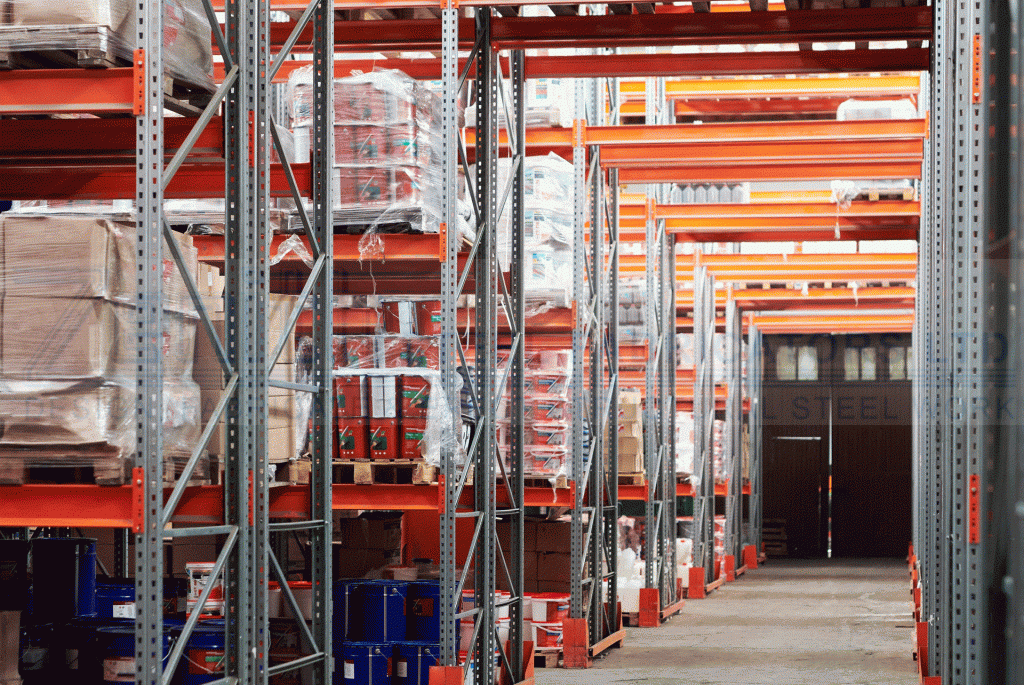
Why Kigali’s SEZs Are Creating Structural Warehouse Demand
Kigali’s SEZ ecosystem is designed to support:
- export-oriented manufacturing
- regional trade distribution
- pharmaceuticals and cold-chain logistics
- FMCG and retail replenishment
- agro-processing
- cross-border consolidation hubs
As occupancy levels rise, tenants need warehouses that support:
- higher throughput per square metre
- better vertical storage density
- faster truck turnaround
- inventory visibility
- future automation readiness
This demand is especially strong as new industrial platforms around Bugesera and Kigali logistics corridors continue to expand.
The strategic shift is clear:
Old model: generic storage buildings
New model: integrated steel warehouse + racking + flow optimization
That shift strongly favors steel warehouse systems over conventional concrete builds.
Steel Warehouse Design Principles for SEZ Logistics Performance
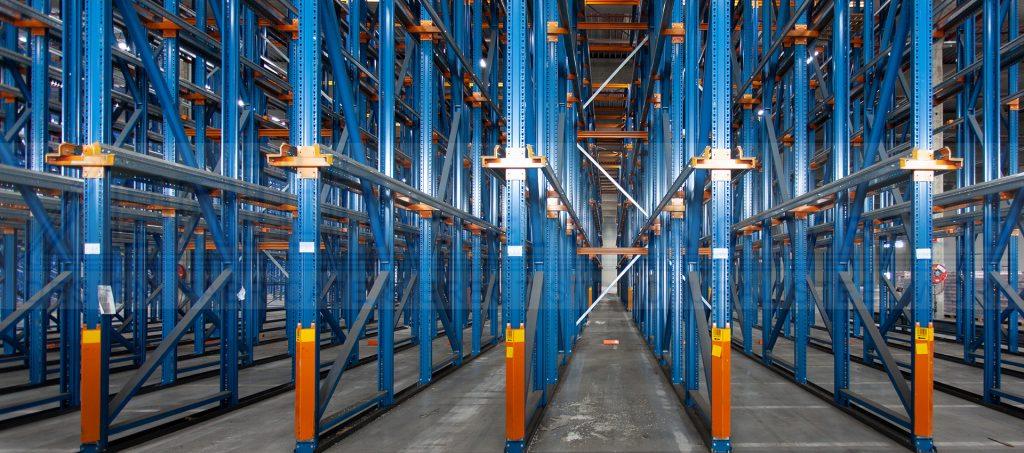
1. Portal Frame Construction for Maximum Usable Space
Zenith Steel’s steel portal frame warehouses are ideal for Kigali SEZ projects because they deliver:
- 20–40m clear spans
- minimal internal columns
- unrestricted forklift movement
- easier racking alignment
- faster installation timelines
- easier future bay extensions
For high-volume tenants, column-free floorplates directly improve storage economics.
2. Eave Height as a Revenue Multiplier
In SEZ warehouse economics, vertical space equals revenue efficiency. A properly engineered steel warehouse with optimized eave height enables:
- 4–6 pallet levels
- conventional or drive-in racking
- mezzanine storage systems
- future conveyor integration
- automated picking pathways
For distributors in Kigali, every additional racking level significantly improves inventory density without increasing land cost.
3. Floor Slab Engineering Must Match the Racking Strategy
One of the biggest design failures in warehouse projects is treating the floor slab as an afterthought. For pallet-racked warehouses, the slab must accommodate:
- point loads from racking uprights
- repetitive forklift wheel loads
- abrasion resistance
- flatness tolerance for high-bay systems
- expansion joint coordination
Zenith Steel’s approach should position slab design and racking design as one integrated engineering workflow, reducing costly retrofits later.
4. Loading Dock Flow Determines Throughput
For SEZ tenants serving Rwanda and regional corridors, dock planning affects operational speed. High-performance layouts should include:
- separate inbound and outbound truck routes
- optimized turning radii
- container staging zones
- dock levellers where needed
- future cold-room or bonded sections
- fast cross-docking capability
This is especially critical for tenants serving DRC, Uganda, Burundi, and Tanzania trade routes.
Pallet Racking Systems for Kigali SEZ Warehouses
1. Conventional Pallet Racking

Best for:
- FMCG
- pharmaceutical distributors
- mixed SKU manufacturers
- 3PL operators
Key advantage: direct access to every pallet position
2. Drive-In Racking
Best for:
- beverage distribution
- agro-processing
- raw material bulk storage
- uniform product lines
Key advantage: maximum pallet density per cubic metre
This works especially well where land costs inside SEZ zones are premium.
Cost Considerations for Rwanda
- Building size, span, and eave height
- Floor slab specification
- Racking type and number of pallet positions
- Import logistics – racking and structural steel are typically imported from regional fabrication facilities
- SEZ compliance requirements
- Foundation design based on local soil conditions
Rwanda’s import and transport costs should be carefully budgeted. Working with a regional fabricator experienced in delivering to Rwanda reduces risk and typically offers better value than sourcing from outside Africa.
Common Mistakes
- Not coordinating the building design with the racking layout from the start
- Specifying an inadequate floor slab for racking and forklift operations
- Underestimating import logistics and lead times for Rwanda
- Building too small for projected growth
- Not factoring SEZ regulations into the building design
Pro Tips
- Engage a supplier who can deliver both the warehouse structure and racking as an integrated solution
- Design for your five-year storage needs, not just current volumes
- Invest in a proper floor slab – it is the most expensive element to fix retrospectively
- Plan loading dock positions around your actual goods flow, not a generic layout
- Consult with the SEZ authority early to understand building standards and compliance requirements
Why Zenith Steel for Warehouses in Rwanda
Zenith Steel Fabricators has an annual capacity of 40,000 metric tonnes and erects both steel warehouse structures and Zen Racks pallet racking systems, designed and coordinated as a single package.
Zenith Steel has experience working in Rwanda’s SEZ environment and understands the regulatory and design requirements of the market. The integrated warehouse-and-racking approach ensures that all elements of the project are aligned from design through to handover.
Contact Zenith Steel’s Kigali office to discuss your warehouse project in Rwanda.
Frequently Asked Questions
i) Does Zenith have a presence in Rwanda?
Yes. Zenith Steel erects warehouse and racking projects across Rwanda.
ii) How long does a warehouse project take from start to finish?
SEZ warehouse project timelines are confirmed by our engineering team based on project scope and complexity. Project timelines depend on the scope, size, and site conditions of your project. Our engineering team will provide a detailed schedule during the planning phase.
iii) Can Zenith supply racking for an existing warehouse in Kigali?
Yes, provided the floor slab and clear height are adequate. A site assessment is recommended before specifying racking for an existing building.
iv) What racking type is best for a manufacturing warehouse?
This depends on the products being stored. Selective racking suits diverse product ranges; drive-in racking suits bulk raw materials. A storage needs analysis is the best starting point.
v) Does Zenith Steel design both the warehouse structure and the internal racking layout?
Yes. Zenith delivers both the steel warehouse structure and the Zen Racks pallet racking system as an integrated package, ensuring the building dimensions, floor slab specification, and racking layout are coordinated from the outset. This eliminates the coordination problems that arise when the warehouse builder and racking supplier work from separate specifications.
vi) What floor slab specification does a warehouse need to support pallet racking?
The floor slab must be engineered to carry the concentrated loads of loaded racking uprights and the dynamic loads of forklift traffic. The exact specification depends on the racking type, load per position, and forklift wheel loads. Zenith’s engineering team provides the floor loading requirements as part of the warehouse design process.