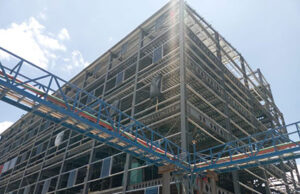
Multi-Storey Steel Buildings in Dar es Salaam: A Developer’s Guide to Structural Steel

The Strategic Shift to Steel in Dar es Salaam’s Commercial Real Estate Market

Dar es Salaam is no longer just Tanzania’s commercial capital, it is one of East Africa’s fastest-evolving urban economies. As demand for Grade A office space, mixed-use developments, and commercial hubs accelerates, developers are under pressure to deliver faster, smarter, and more cost-efficient buildings.

Traditional construction methods, particularly reinforced concrete, are increasingly being challenged by a more agile alternative: multi-storey structural steel buildings.

For developers, the question is no longer whether steel is viable, it is how to strategically deploy steel to gain a competitive edge. This blog unpacks the key drivers, trade-offs, and execution priorities for multi-storey steel buildings in Dar es Salaam, while aligning with the proven capabilities of Zenith Steel Fabricators across East Africa.

Why Structural Steel Is Gaining Market Share in Dar es Salaam

      1. Speed to Market: A Direct Lever on ROI

In Dar es Salaam’s competitive commercial property market, time is capitalSteel structures are fabricated off-site and assembled on-site, enabling:


Developers using steel can accelerate revenue generation timelines, creating a measurable advantage in high-demand zones like CBD, Masaki, and Oysterbay.
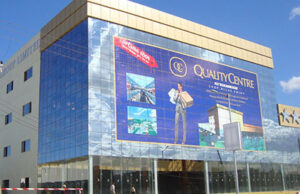
Shopping mall - steel multi storey

      2. Lighter Structures = Lower Foundation Costs

Dar es Salaam’s coastal geology presents complex soil conditions, including sandy, loose, and waterlogged soils. Steel buildings:

  • Weigh significantly less than concrete structures
  • Reduce foundation size and depth
  • Lower excavation and piling costs
 

On challenging sites, steel is not just a design choice, it is a cost optimization strategy.

      3. Open-Plan Flexibility: Meeting Modern Tenant Demand

Today’s commercial tenants, banks, tech firms, co-working operators, prioritize:

  • Open layouts
  • Adaptability
  • Future reconfiguration
Zenith steel fabricator multi-storey

Steel framing enables:

  • Large column-free spans
  • Flexible floor plates
  • Easy retrofitting and expansion
 

Steel buildings achieve higher occupancy rates and longer tenant retention.

      4. Architectural Freedom Without Structural Constraints

Steel is not a visual style, it is an enabler of design innovationDevelopers and architects can incorporate:

  • Glass curtain walls
  • Composite panels
  • Stone façades
  • Hybrid architectural expressions
 

With Zenith Steel’s fabrication expertise, complex designs can be executed with precision and consistency, ensuring architectural intent is preserved from concept to completion. This includes the Quality Centre and AFRICAB multi-storey buildings, projects in Dar es Salaam designed and fabricated by Zenith Steel. 

Key Considerations for Developers

       1. Early Integration of Structural Engineering Expertise

Steel design is highly specialized. Success depends on:

  • Accurate load calculations (including coastal wind loads)
  • Structural coordination with adjacent buildings
  • Site-specific soil analysis
Steel Multi-storey - Structural steel works


Engage experienced steel engineers early, and align them with a capable fabricator like Zenith Steel.

       2. Fire Safety: Budget Early, Design Smart

Unlike concrete, steel requires added fire protection:

  • Intumescent coatings
  • Fire-rated board encasement
  • Spray-applied systems
 

Treating fire protection as an afterthought, leading to budget overruns.

        3. Integrated Supply Chain and Fabrication Strategy

Project success depends heavily on fabrication quality and logistics. Working with a regional leader like Zenith Steel Fabricators ensures:

  • Controlled manufacturing standards
  • Reduced lead times
  • Cost efficiencies vs overseas sourcing
 

Fabrication is not a procurement step, it is a core project risk factor.

        4. Regulatory Compliance in Tanzania

Developers must:

  • Secure approvals from local authorities
  • Ensure compliance with Tanzanian building codes
  • Use certified structural engineers
 

Delays in approvals can erode the speed advantage of steel, making local expertise essential.

Steel vs Concrete: The Dar es Salaam Context

Both materials are viable for commercial construction in Tanzania. Here is how they compare in the local context:

  • Construction speed: Steel is faster for the structural frame, which is particularly valuable in Dar es Salaam’s congested commercial districts
  • Soil conditions: Steel’s lighter weight is an advantage on Dar es Salaam’s often-challenging coastal soils
  • Labour: Concrete construction is more labour-intensive; steel erection requires fewer but more specialized workers
  • Fire protection: Steel requires additional fire protection measures; concrete has inherent fire resistance
  • Flexibility: Steel buildings are easier to modify, extend, or repurpose over their lifetime
  • Recycling: Steel is fully recyclable; concrete demolition generates more waste

Cost Drivers for Multi-Storey Steel Buildings in Dar es Salaam

Understanding cost variables enables better financial planning. This includes:

  • Number of floors and total built-up area
  • Span lengths and column grid design
  • Type of floor system (composite deck, precast, or conventional)
  • Fire protection requirements
  • Façade complexity
  • Foundation design (based on geotechnical reports) 
  • MEP (Mechanical, electrical, and plumbing services) integration
  • Steel market pricing fluctuations
 

Steel projects reward early-stage optimization, late design changes are costly.

Common Mistakes

  • Appointing a structural engineer without steel-frame experience
  • Not coordinating the steel design with MEP services early enough
  • Underbudgeting fire protection costs
  • Designing the facade independently of the structural frame, creating coordination issues during construction
  • Not allowing adequate lead time for steel fabrication

Pro tips for Developers in Dar es Salaam

To maximize ROI and minimize risk:

  • Engage the steel fabricator during the design phase, not after drawings are complete
  • Use composite floor systems for optimal performance
  • Plan logistics around crane access and material laydown in dense urban areas
  • Factor the building’s long-term flexibility into the investment case – steel buildings hold their value because they can be adapted
  • Partner with a regional expert like Zenith Steel Fabricators for quality assurance and logistical reliability

Structural Steel vs Reinforced Concrete: At a Glance

For multi-storey commercial buildings, both structural steel and reinforced concrete are widely used. Here is how they compare for developers in East Africa: 

Factor

Steel Frame

Reinforced Concrete

Erection Speed

Fast – frame erected in weeks, not months

Slow – each floor requires formwork, pouring, and curing

Floor Plate Flexibility

Wide column-free spans – ideal for open-plan layouts

Shorter spans – more columns, reduced flexibility

Foundation Loads

Lightweight – allows for smaller, cost-efficient foundations

Heavy – requires larger, more expensive foundations

Seismic Performance

Ductile – absorbs seismic forces by flexing

Brittle unless specially designed and reinforced

Fire Protection

Requires intumescent coating or structural encasement

Inherent fire resistance

End of Life / Sustainability

Fully recyclable – retains residual material value

Difficult to repurpose or recycle, higher demolition waste

Why Zenith Steel for Multi-Storey Buildings in Dar es Salaam

Zenith Steel Fabricators has been building structural steelworks since 1977. With an annual fabrication capacity of 40,000 metric tonnes, Zenith handles multi-storey projects across East Africa.

Zenith’s structural steelworks division fabricates columns, beams, trusses, and all associated steel components for commercial buildings. The company works with developers, architects, and structural engineers from design through to erection.

Contact Zenith Steel’s Dar es Salaam office to discuss your multi-storey building project in Tanzania.

Frequently Asked Questions

       i) How tall can a steel-framed building be?

Steel can support buildings of any height. For commercial developments in Dar es Salaam, steel framing is commonly used for three to twelve-storey buildings, though taller structures are entirely feasible with appropriate structural engineering.

      ii) Is steel more expensive than concrete for multi-storey buildings?

The total project cost depends on many factors. When accounting for faster construction, lighter foundations, and reduced on-site labour, steel is typically cost-competitive with concrete for mid-rise commercial buildings. Request quotations for both approaches to compare for your specific project.

      iii) How does Dar es Salaam’s climate affect steel buildings?

The coastal, humid climate requires proper specification of steel coatings and fire protection materials. Galvanized and painted structural steel performs well in Dar es Salaam’s conditions with standard maintenance schedules.

      iv) Does Zenith fabricate in Tanzania?

Zenith Steel serves Tanzania and erects structures across the country. All components are manufactured to specification and erected on-site in Tanzania. Zenith Steel has extensive project experience across East Africa.

       v) Does Zenith Steel work with architects and structural engineers on multi-storey projects?

Yes. Zenith Steel works alongside the project architect and structural engineer throughout the design and construction process. The earlier Zenith’s fabrication team is engaged, the better the coordination between structural intent and practical fabrication and erection requirements.

      vi) How does Zenith Steel handle fire protection for multi-storey buildings?

Fire protection for structural steelwork is a critical component of any multi-storey project. Zenith works with the project’s fire consultant to specify and apply the appropriate fire protection system – intumescent coatings, board encasement, or spray-applied protection – depending on the building’s fire engineering requirements and local building regulations.

Leave a Reply

Your email address will not be published. Required fields are marked *