Multi-Storey Steel Buildings in Nairobi: What Commercial Developers Need to Know

Nairobi’s Commercial Boom Is Redefining Construction Priorities

Nairobi’s commercial real estate sector is entering a new phase, defined not just by growth, but by speed, efficiency, and adaptability. As demand rises for mid-rise office blocks, mixed-use developments, and commercial centres, developers are under increasing pressure to deliver projects faster, optimize capital expenditure, and future-proof assets.

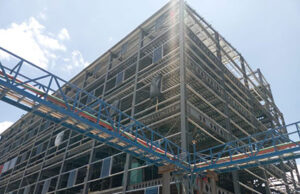
In this context, multi-storey steel buildings in Nairobi like the Sifa Towers designed and fabricated by Zenith Steel are emerging as a strategic advantage, not just a construction alternative.

At Zenith Steel Fabricators, we are seeing a clear shift: forward-thinking developers are moving toward structural steel systems to unlock shorter project cycles, lower lifecycle costs, and more flexible commercial spaces.

This article breaks down the why, the trade-offs, and the critical decisions developers must make when considering steel for multi-storey construction in Nairobi.

Why Nairobi’s Developers Are Moving Toward Structural Steel

       1. Speed to Market: The Single Biggest Value Driver

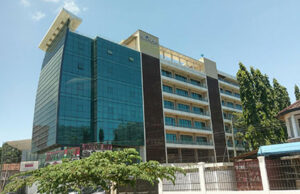
In commercial development, delays directly erode returns. Every additional month increases financing costs and postpones rental income. Steel changes this equation. Unlike traditional concrete construction, which relies heavily on sequential on-site processes, steel structures are:
steel structures - steel multi storey

  • Fabricated off-site
  • Delivered ready for assembly
  • Erected rapidly using cranes
 

For a typical 4–8 storey commercial building:

  • Steel frame erection: Weeks
  • Concrete frame construction: Several months
 

Faster delivery doesn’t just save time, it compresses the entire investment cycle, accelerating revenue generation and improving internal rate of return (IRR).

        2. Lower Foundation Costs in Constrained Urban Sites

Steel structures are significantly lighter than reinforced concrete. This has direct implications for:

  • Foundation size
  • Excavation depth
  • Overall substructure cost
 

In Nairobi where:

  • Plots are increasingly constrained
  • Soil conditions vary
  • Excavation logistics are complex
 

Steel offers a practical advantage by reducing both cost and construction complexity.

        3. Design Flexibility = Higher Long-Term Asset Value

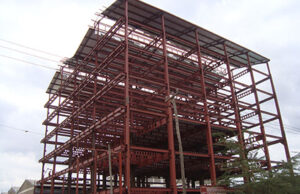
Modern tenants demand open, adaptable spaces. Steel framing enables:

  • Large column-free spans
  • Flexible partitioning
  • Easy future modifications or extensions
steel structure - steel multi storey

This is particularly valuable for:

  • Office spaces
  • Retail floors
  • Mixed-use developments
 

Additionally, steel structures allow full architectural freedom. Buildings can be finished with:

  • Glass curtain walls
  • Composite panels
  • Masonry or hybrid façades
 

Steel doesn’t just reduce build time, it enhances long-term leasing potential and asset repositioning flexibility.

         4. Reduced On-Site Disruption in Dense Commercial Zones

Concrete construction is labour-intensive and site-heavy:

  • Formwork
  • Rebar installation
  • Continuous pouring and curing
Steel Multi-storey - Structural steel works

Steel construction, by contrast:

  • Requires fewer on-site materials
  • Minimizes noise and dust
  • Reduces traffic congestion
 

In Nairobi’s busy commercial districts, this translates to:

  • Fewer disruptions to neighbouring properties
  • Easier compliance with urban construction constraints

Steel vs Concrete for Multi-Storey Buildings in Nairobi

Both steel and concrete are proven structural systems, and the right choice depends on the specific project. Here is how they compare for typical mid-rise commercial buildings in the Nairobi context:

  • Construction speed: Steel is significantly faster for the structural frame
  • Foundation cost: Steel structures are lighter, requiring smaller and less expensive foundations
  • Floor plate flexibility: Steel allows larger column-free spans, which is preferred for office and retail use
  • Fire protection: Steel requires fire-rated cladding or intumescent coatings; concrete has inherent fire resistance
  • Long-term adaptability: Steel buildings are easier to modify, extend, or repurpose
  • Sustainability: Steel is fully recyclable at end of life; concrete is more difficult to repurpose

Key Considerations for Developers

        1. Early Integration of Structural Expertise

Steel projects require specialist engineering, particularly for:

  • Wind loads
  • Seismic considerations (relevant in Nairobi)
  • Structural coordination with floor systems and façades
 

Engaging experienced engineers early avoids costly redesigns later.

         2. Fire Protection: A Non-Negotiable Design Element

Steel loses strength at high temperatures, making fire protection essential. Common solutions include:

  • Intumescent coatings
  • Fire-rated board encasement
  • Spray-applied systems
 

Each option impacts:

  • Cost
  • Aesthetics
  • Maintenance
 

Best practice: Integrate fire strategy during the design phase, not after.

          3. Optimizing Floor Systems for Speed and Efficiency

Most multi-storey steel buildings use composite floor systems, which combine:

  • Profiled steel decking
  • Concrete topping
 

Benefits:

  • Faster installation
  • Structural efficiency
  • Smooth, service-ready floors
 

This aligns with Zenith Steel’s approach to delivering integrated structural systems, not just steel frames.

          4. Navigating Regulatory Requirements in Kenya

Projects must comply with:

  • National Construction Authority (NCA)
  • Nairobi County regulations
  • Kenyan building standards
 

Delays often arise from:

  • Incomplete approvals
  • Misaligned documentation
 

Recommendation: Work with partners experienced in local compliance and approvals to avoid costly interruptions.

Cost Factors for Multi-Storey Steel Buildings

The cost of a multi-storey steel building in Nairobi is influenced by:

  • Number of storeys and total floor area
  • Column grid spacing and span requirements
  • Fire protection specification
  • Cladding and facade design
  • Floor system type (composite deck, precast, etc.)
  • Site conditions and foundation requirements
  • Current steel and material prices
 

Steel-framed commercial buildings are often cost-competitive with concrete when the faster construction timeline, reduced foundation costs, and lower on-site labour requirements are factored in.

Common Mistakes in Multi-Storey Steel Projects

  • Not engaging a structural engineer with specific steel-frame experience
  • Underestimating fire protection costs in the project budget
  • Designing the building without consulting the steel fabricator on practical erection sequences
  • Failing to coordinate the steel frame design with mechanical, electrical, and plumbing services
  • Not accounting for lead times on steel fabrication when planning the project schedule

Pro Tips: How Leading Developers Maximize Steel’s Value

  • Involve the steel fabricator early into the project at the design stage, not after drawings are finalized
  • Use design-and-build models like AutoCAD and Tekla to improve coordination between the architect, engineer, and fabricator
  • Plan erection around site access constraints – especially on tight urban sites in Nairobi’s CBD
  • Prioritize composite flooring systems for the best balance of speed, cost, and structural performance
  • Evaluate buildings based on lifecycle value, not just initial cost
 

At Zenith Steel Fabricators, this integrated approach consistently achieve faster delivery, lower risk, and stronger long-term returns.

Structural Steel vs Reinforced Concrete: At a Glance

For multi-storey commercial buildings, both structural steel and reinforced concrete are widely used. Here is how they compare for developers in East Africa:

Factor

Steel Frame

Reinforced Concrete

Erection Speed

Fast – frame erected in weeks, not months

Slow – each floor requires formwork, pouring, and curing

Floor Plate Flexibility

Wide column-free spans – ideal for open-plan layouts

Shorter spans – requires more columns, limiting flexibility

Foundation Loads

Lighter structure – smaller, more cost-efficient foundations

Heavy structure – requires larger, more expensive foundations

Seismic Performance

Ductile – absorbs seismic forces through controlled flexibility

Brittle unless specially designed and reinforced

Fire Protection

Requires intumescent coating or protective encasement

Inherent fire resistance

End of Life

Fully recyclable – retains residual material value

Difficult to repurpose or recycle

Why Zenith Steel for Multi-Storey Buildings in Nairobi

Zenith Steel Fabricators has been fabricating structural steelwork in Kenya since 1977. With an annual capacity of 40,000 metric tonnes and a fabrication facility in Nairobi’s Industrial Area, Zenith is equipped to handle multi-storey commercial projects of significant scale and complexity.

Zenith’s structural steelworks division fabricates columns, beams, trusses, purlins, and all associated steelwork for multi-storey buildings. The company works with developers, architects, and structural engineers throughout the project lifecycle – from design coordination to on-site erection.

If you are planning a commercial steel building in Nairobi, contact Zenith Steel to discuss your project requirements.

Frequently Asked Questions

        i) How many storeys can a steel-framed building achieve?

Steel framing can support buildings of virtually any height. For commercial developments in Nairobi, steel is most commonly used for buildings of three to twelve storeys, though taller structures are entirely feasible with appropriate engineering.

       ii) Is structural steel available locally in Kenya?

Yes. Kenya has established steel fabrication capability, with companies like Zenith Steel operating large-scale fabrication facilities in Nairobi. Steel sections and plates are sourced from international and regional suppliers and fabricated locally to project specifications.

      iii) How does the cost of a steel building compare to concrete in Nairobi?

Costs vary by project, but steel-framed buildings are typically competitive with concrete when accounting for faster construction, lighter foundations, and reduced on-site labour. For specific cost comparisons, request quotations from both steel fabricators and concrete contractors for your project.

      iv) Can a steel building be designed to look like a concrete building?

Yes. The external appearance of a building is determined by its cladding and finishes, not its structural frame. Steel buildings can be finished with any facade treatment, including those that give a concrete, glass, or masonry appearance.

       v) What is the lead time for steel fabrication?

Lead times depend on the scale and complexity of the project. Our engineering team will confirm a detailed schedule based on your specific requirements.

      vi) Does Zenith Steel work with architects and structural engineers on multi-storey projects?

Yes. Zenith Steel works alongside the project architect and structural engineer throughout the design and construction process. The earlier Zenith’s fabrication team is engaged, the better the coordination between structural intent and practical fabrication and erection requirements.

     vii) How does Zenith Steel handle fire protection for multi-storey buildings?

Fire protection for structural steelwork is a critical component of any multi-storey project. Zenith works with the project’s fire consultant to specify and apply the appropriate fire protection system – intumescent coatings, board encasement, or spray-applied protection – depending on the building’s fire engineering requirements and local building regulations.

Leave a Reply

Your email address will not be published. Required fields are marked *