

Multi-Storey Steel Commercial Buildings in Addis Ababa: A Guide for Developers and Investors

A Structural Shift in Addis Ababa’s Commercial Real Estate Market

Addis Ababa is rapidly emerging as a strategic commercial hub in Africa, driven by diplomatic activity around the African Union, expanding financial services, and rising private-sector investment. As demand for high-quality office and mixed-use developments grows, developers are under increasing pressure to deliver projects faster, more efficiently, and with long-term adaptability in mind.

In this context, structural steel is no longer an alternative, it is becoming a strategic advantage.
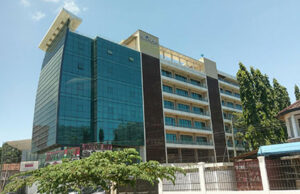
steel structures - steel multi storey

Forward-looking developers are shifting from traditional reinforced concrete to steel-framed systems to unlock speed, reduce lifecycle costs, and future-proof assets. With expertise from Zenith Steel, structural steel is enabling a new generation of high-performance commercial buildings across East Africa.

Why Structural Steel is Gaining Ground in Addis Ababa

       1. Accelerated Construction Timelines = Faster Revenue Realization

Time-to-market is a critical driver of project profitability.

Steel structures are fabricated off-site and assembled on-site, significantly reducing construction timelines compared to conventional concrete methods. While concrete requires sequential processes, formwork, pouring, and curing, steel erection happens rapidly and with precision.
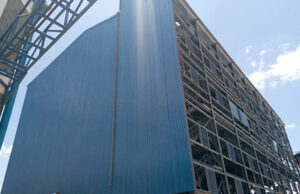
steel Multi-storey - Structural steel works

Impact for developers:

  • Faster tenant occupancy
  • Reduced exposure to inflation and material cost volatility
  • Earlier revenue generation and improved internal rate of return (IRR)
 

        2. Seismic Resilience in the East African Rift Region

Addis Ababa lies within the East African Rift System, making seismic performance a key structural consideration.

Steel structures are inherently ductile, meaning they can absorb and dissipate seismic energy through controlled deformation rather than brittle failure. This makes them particularly suitable for regions with seismic risk when engineered correctly.

Strategic advantage:

  • Enhanced building safety and compliance
  • Reduced long-term structural risk
  • Higher investor confidence
 

       3. Reduced Foundation Costs Through Lightweight Structures

Steel buildings are significantly lighter than reinforced concrete equivalents.

In a market like Addis Ababa, where soil conditions can vary and deep foundations can be costly, this weight reduction translates into meaningful savings.
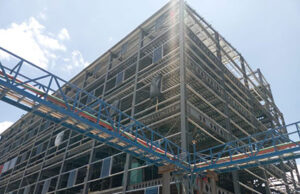
Steel Multi-storey - Structural steel works

Cost implications:

  • Smaller and shallower foundations
  • Lower excavation and material costs
  • Improved feasibility for complex urban sites
 

       4. Flexible Floor Plates for Modern Commercial Demand

Today’s tenants prioritize adaptability, open-plan offices, co-working environments, and scalable layouts.

Steel framing allows for wide, column-free spans, enabling flexible floor configurations that can evolve over time.

Long-term value creation:

  • Higher tenant retention
  • Ability to reposition assets
  • Increased rental yield potential

Key Design and Engineering Considerations

To maximize the benefits of structural steel, developers should align early with experienced partners such as Zenith Steel and focus on:

  • Structural Engineering: Engage specialists with steel-frame and seismic expertise
  • Fire Protection: Apply intumescent coatings or board encasement per Ethiopian codes
  • Facade Integration: Align structural and facade design early for efficiency
  • Floor Systems: Use composite steel decking with concrete topping for optimal performance
  • Regulatory Compliance: Adhere to Ethiopian building standards and municipal requirements

Cost Drivers: What Influences Steel Building Economics

Understanding cost variables is critical for accurate project planning:

  • Number of storeys and total gross floor area
  • Structural spans and column grid configuration
  • Fire protection requirements
  • Facade design complexity
  • Geotechnical conditions and foundation design
  • Steel material sourcing and fabrication logistics

Common Developer Pitfalls (and How to Avoid Them)

Even with its advantages, structural steel requires the right execution strategy:

Frequent mistakes:

  • Delaying engagement with steel specialists
  • Underestimating fire protection costs
  • Designing facades independently from the structural system
  • Ignoring fabrication and delivery lead times
 

Mitigation strategy:
Adopt an integrated design approach with early contractor and fabricator involvement, an area where Zenith Steel provides end-to-end support.

Pro Tips for Maximizing ROI with Steel Construction

  • Involve steel fabricators at the concept design stage
  • Use composite floor systems to optimize speed and structural efficiency
  • Plan erection sequences for constrained urban environments
  • Incorporate flexibility into long-term asset valuation models

Structural Steel vs Reinforced Concrete: A Strategic Comparison

For multi-storey commercial buildings, both structural steel and reinforced concrete are widely used. Here is how they compare for developers in East Africa: 

Factor

Steel Frame

Reinforced Concrete

Erection Speed

Rapid assembly in weeks

Slower, sequential construction

Floor Flexibility

Large, column-free spans

More columns, limited adaptability

Foundation Loads

Lightweight, reduced foundation costs

Heavy, requiring substantial foundations

Seismic Performance

Ductile and energy-absorbing

Brittle unless heavily reinforced

Fire Resistance

Requires added protection

Inherent resistance

Sustainability

Fully recyclable, retains value

Difficult to recycle

Why Zenith Steel for Multi-Storey Buildings in Ethiopia

Zenith Steel Fabricators has been fabricating structural steelwork since 1977 and delivers across 14 African countries including Ethiopia. With an annual capacity of 40,000 metric tonnes, Zenith handles multi-storey commercial projects of significant scale.

Contact Zenith Steel to discuss your commercial building project in Addis Ababa.

Frequently Asked Questions

       i) Can steel buildings withstand earthquakes?

Yes. Steel’s inherent ductility makes it well-suited to seismic zones. Properly designed steel buildings absorb and dissipate seismic energy rather than cracking as unreinforced concrete can.

      ii) Does Zenith deliver to Ethiopia?

Yes. Zenith Steel erects structural steelwork across East Africa including Ethiopia. All components are installed on-site by Zenith’s teams.

     iii) How does steel compare to concrete cost-wise in Addis Ababa?

Steel is typically competitive when accounting for faster construction, lighter foundations, and reduced labour. Request quotations for both approaches for a direct comparison.

     iv) What is the typical construction timeline?

The structural frame can be erected significantly faster than concrete alternatives. Project timelines are confirmed by our engineering team based on project scope, site conditions, and location. Contact Zenith Steel to discuss your project.

      v) Does Zenith Steel work with architects and structural engineers on multi-storey projects?

Yes. Zenith Steel works alongside the project architect and structural engineer throughout the design and construction process. The earlier Zenith’s fabrication team is engaged, the better the coordination between structural intent and practical fabrication and erection requirements.

      vi) How does Zenith Steel handle fire protection for multi-storey buildings?

Fire protection for structural steelwork is a critical component of any multi-storey project. Zenith works with the project’s fire consultant to specify and apply the appropriate fire protection system – intumescent coatings, board encasement, or spray-applied protection – depending on the building’s fire engineering requirements and local building regulations.

Leave a Reply

Your email address will not be published. Required fields are marked *