

Prefabricated Steel Structures for NGO, Government, and Private Sector Projects in South Sudan
Quick answer: Prefabricated steel structures are the fastest way to deliver durable buildings to South Sudan because they ship flat-pack, assemble in days rather than months, and survive remote conditions where masonry construction is impractical. NGO camps, government offices, schools, clinics, and private commercial sites all benefit. Standard prefab buildings are delivered in 8-14 weeks at USD $180-$320 per square metre.
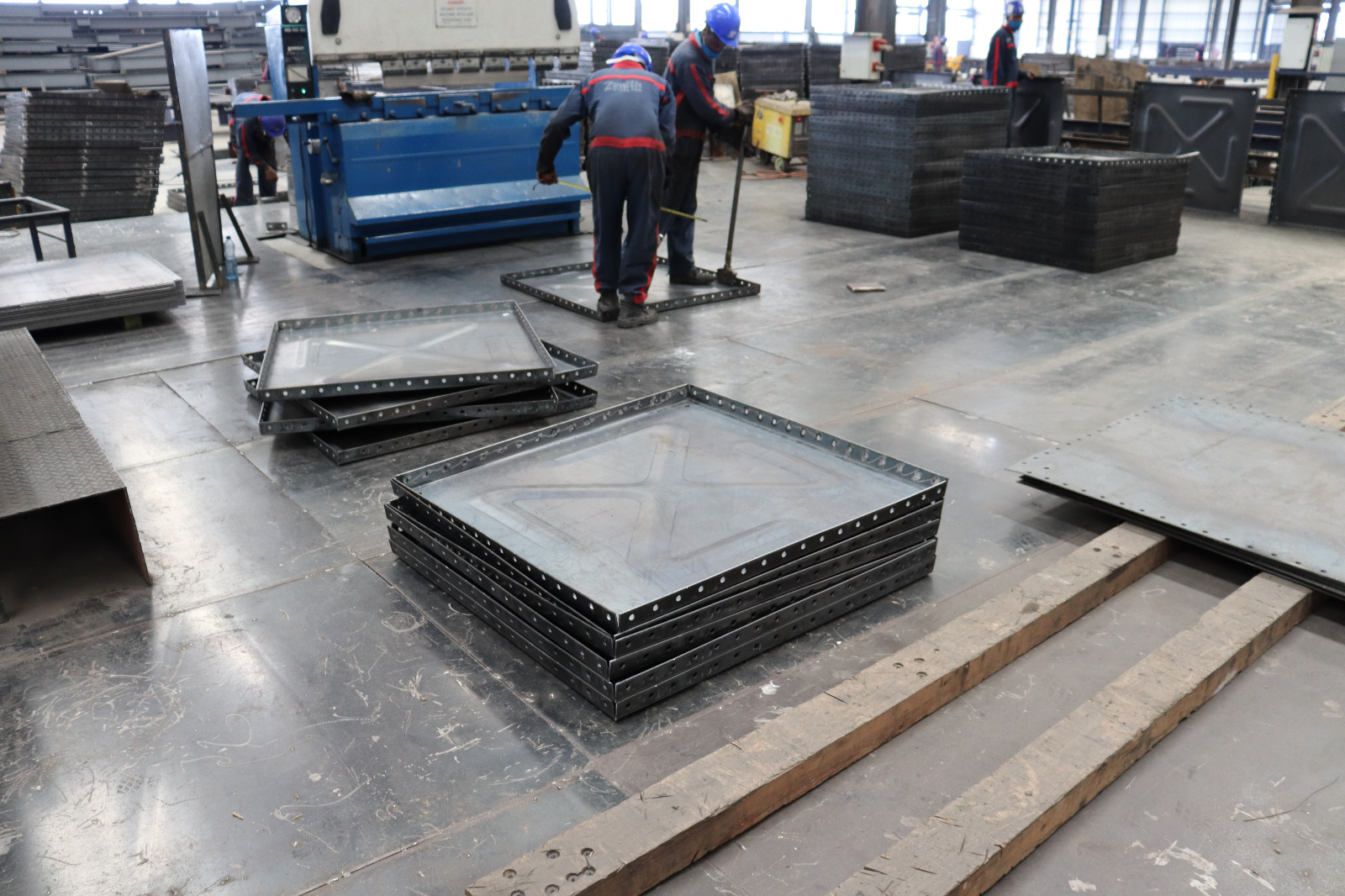
South Sudan’s ongoing infrastructure development requires building solutions that can be deployed quickly, withstand harsh operating conditions, and remain dependable over the long term. In a market where project delays, logistics constraints, and material shortages often challenge conventional construction, prefabricated steel buildings offer a smarter and more resilient alternative.
Engineered off-site and assembled on location within weeks, these structures enable NGOs, government institutions, and private sector operators to deliver critical facilities faster without compromising on quality. Whether for warehouses, administrative offices, medical clinics, schools, or industrial workshops, prefabricated steel structures combine speed, durability, and scalability, providing permanent-grade infrastructure suited to one of Africa’s most demanding development environments.
Why Pre-fabricated Steel for South Sudan
South Sudan’s construction challenges are well-documented: limited local building materials, scarce skilled labour, poor road networks, and a climate that includes intense heat and heavy seasonal rainfall. Conventional construction methods struggle in this environment.
Prefabricated steel structures bypass these challenges:
- All components are manufactured at a quality-controlled fabrication facility
- Components are shipped flat-packed or nested for efficient transport
- Assembly requires a smaller, specialized crew rather than a full construction workforce
- Erection is fast – weeks rather than months
- The finished buildings are durable, weather-resistant, and low-maintenance
Applications of pre-fabricated steel in South Sudan
a) NGO and Humanitarian Operations
Warehouses for relief supplies, office buildings for field operations, clinic structures, and compound facilities. Speed of deployment and the ability to reach remote locations are critical requirements for humanitarian organizations.
b) Government Infrastructure
Administrative buildings, market shelters, storage facilities, and institutional buildings. Prefabricated steel provides the government with a fast, cost-effective way to build permanent infrastructure across the country.
c) Private Sector
Offices, workshops, storage buildings, and operational facilities for businesses operating in South Sudan’s emerging economy. Steel structures provide the security and durability that commercial operations require.
d) Water Storage
Pressed steel panel water tanks complement the building program, providing the water storage infrastructure that every facility needs. Zen Tanks can be delivered and assembled alongside the steel buildings.
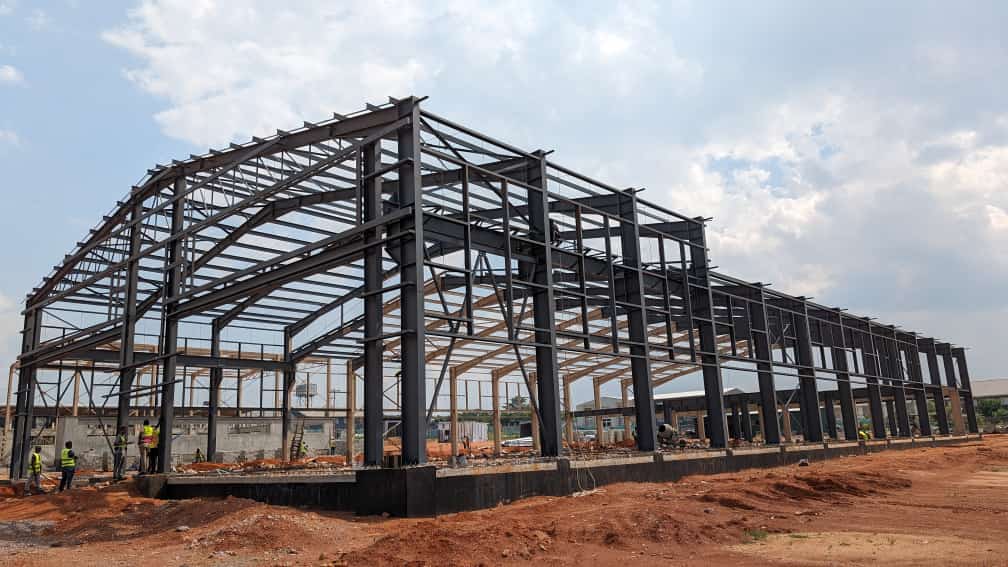
Advantages of Prefabricated Steel
- Quality: manufactured under controlled conditions, not dependent on on-site conditions
- Speed: buildings erected in one to six weeks on-site
- Transportability: flat-packed components maximize truck load efficiency
- Durability: galvanized steel resists corrosion, termites, and weather
- Relocatable: bolted structures can be disassembled and moved to new locations
- Scalable: additional buildings or extensions can be added as needs grow
Key Planning Considerations for Steel Building Projects in South Sudan
Successful steel building projects in South Sudan require early planning around logistics, foundations, utilities, and long-term maintenance. Addressing these factors upfront helps reduce delays, control costs, and improve structural performance.
1. Transport Logistics and Delivery Planning
South Sudan’s road network can be unpredictable. It is important to plan delivery routes, unloading zones, and on-site staging areas before fabrication begins.
Key considerations include:
- Accessibility of trucks and heavy equipment
- Seasonal road conditions
- Distance from fabrication yard to site
- Safe material storage areas on site
Strong transport logistics planning for steel structures in South Sudan minimizes installation delays and material damage.
2. Foundation
The foundation for a steel building should match local soil characteristics and the intended permanence of the structure.
Best practice areas:
- Soil testing before design approval
- Matching shallow or deep foundations to soil bearing capacity
- Designing for future expansion
- Aligning with permanent vs semi-permanent use cases
Proper foundation engineering for steel structures improves durability and lifecycle value.
3. Site Security and Compound Layout
For projects such as warehouses, schools, and site offices, security must be integrated into the site layout. This includes:
- Perimeter fencing zones
- Controlled entry and exit points
- Guard house placement
- Lighting and visibility planning
- Safe storage for high-value equipment
Steel building efficiency improves when electrical, plumbing, drainage, and water supply systems are coordinated at the design stage.
Important integrations:
- Power routing and backup systems
- Plumbing shafts and service corridors
- Water tank positioning
- Drainage and waste management
- HVAC allowances where required
This reduces costly redesigns during site installation.
5. Maintenance and Inspection Planning
A proactive inspection and maintenance protects long-term performance, especially in remote and high-use environments. Preventive maintenance lowers lifecycle costs and preserves structural integrity.
Cost Factors for Steel Buildings in South Sudan
Understanding the main cost drivers of steel buildings in South Sudan helps project teams budget accurately.
Major cost factors include:
- Building size and structural specification
- Number of buildings within the project scope
- Transport distance and route complexity
- Foundation and soil preparation requirements
- Assembly crew mobilization and accommodation
- Water tank capacity and support structure needs
- Utility installation requirements
A clear cost framework improves procurement and investment decisions.
Common Mistakes to Avoid
- Using temporary tent structures for long-term needs – Temporary shelters may appear cheaper upfront, but permanent steel structures provide better durability, safety, and long-term value at competitive cost.
- Underestimating South Sudan transport logistics – Poor route planning often leads to damaged components, delayed schedules, and higher mobilization costs.
- Inadequate foundation design – Skipping soil assessment or under-designing foundations can compromise structural safety and increase future repair costs.
- Failing to integrate water storage into building design – For camps, schools, hospitals, and industrial sites, water tank integration should be planned alongside the building program, not added later.
Prefabricated Steel vs Traditional On-Site Construction
For remote or infrastructure-limited sites – common across much of East and Central Africa – prefabricated steel offers significant practical advantages over traditional construction:
Factor | Prefabricated Steel Frame | Traditional / Alternative Construction |
Local Material Dependency | None – all components are manufactured off-site under strict quality standards | High – depends heavily on local material supply chain quality and availability |
Skilled Labour on Site | Minimal – erection is primarily an assembly process | Extensive – requires masons, carpenters, plasterers, and multiple specialist trades |
Weather Sensitivity | Low – assembly can continue in most weather conditions | High – rain can halt masonry, concrete works, and plastering |
Transport to Remote Sites | Flat-packed steel components fit on standard trucks, making transport easier | Bulk materials are heavier, take more space, and are harder to transport to remote areas |
Build Quality Consistency | Factory-controlled fabrication ensures consistent quality across all components | Variable – quality depends on local labour skill levels and material standards |
Project Speed | Fast – projects can be completed in weeks rather than months | Slow – multiple sequential trades often create delays between stages |
Why Zenith Steel for Projects in South Sudan
Zenith Steel Fabricators delivers prefabricated steel structures and Zen Tanks water storage across 14 African countries including South Sudan. With nearly five decades of experience, an annual fabrication capacity of 40,000 metric ton, and proven logistics capability in challenging environments, Zenith is the practical choice for infrastructure projects in South Sudan.
The combination of steel buildings and water tanks from a single supplier simplifies procurement, logistics, and project management – critical advantages in South Sudan’s operating environment.
Contact Zenith Steel to discuss your project requirements in South Sudan.
Frequently Asked Questions
i) Can Zenith deliver to locations throughout South Sudan?
Yes. Zenith Steel has experience erecting structures in challenging locations across East and Central Africa. Steel components and tank panels are flat-packed for efficient transport on standard trucks.
ii) How fast can buildings be erecte
Prefabricated steel buildings can be erected on-site efficiently, with timelines depending on project scope.
iii) Can buildings be relocated if the project moves?
Yes. Bolted steel structures can be disassembled and reassembled at a new location, protecting the investment.
iv) Can Zenith supply both buildings and water tanks?
Yes. Zenith delivers both prefabricated steel buildings and Zen Tanks water storage as an integrated package, simplifying procurement and logistics.
v) How long does it take from order to first components on site?
Lead times depend on the project scope, complexity, and delivery location. Zenith Steel’s engineering team will confirm the full project schedule – from design sign-off to on-site delivery – during the project planning phase.
vi) Can Zenith Steel supply both the buildings and water tanks for a remote site project?
Yes. Zenith delivers both prefabricated steel buildings and Zen Tanks water storage as an integrated package, simplifying procurement and logistics for project developers working in remote or challenging locations.