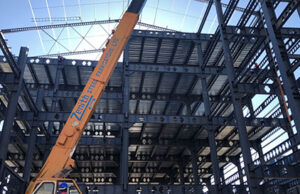
Steel Factories and Industrial Structures for Zambia’s Mining Towns and Manufacturing Sector

Zambia’s Industrial Expansion Needs Faster, Smarter Factory Infrastructure

Zambia is entering a new phase of industrial growth. While copper remains central to the economy, the Copperbelt and Lusaka industrial corridor are increasingly attracting investment in agro-processing, mining support services, packaging, logistics, and light manufacturing. As this shift accelerates, one decision has become strategically critical for manufacturers: how to build production-ready facilities faster, more efficiently, and with long-term scalability in mind. Zambia’s broader economic outlook remains optimistic, supported by mining momentum and diversification efforts.

For investors and operators, a factory building is no longer just a structure, it is a productivity asset that directly influences workflow efficiency, operating costs, expansion potential, and time to market.

This is why steel factory buildings in Zambia are rapidly becoming the preferred solution over conventional concrete construction.

Steel offers three major advantages that align with the needs of modern manufacturing:

  • Speed to operational readiness
  • Flexible clear-span production layouts
  • Lower lifecycle and expansion costs
 

For manufacturers entering Zambia’s fast-growing industrial zones, steel structures provide the agility required to compete in domestic and cross-border markets.

Zambia’s Industrial Growth Is Driving Demand for Scalable Factory Buildings

Zambia’s strategic location gives manufacturers direct access to regional trade routes serving DRC, Malawi, Tanzania, and broader Southern Africa.

As more industrial players establish operations in Lusaka and the Copperbelt, the demand is shifting toward high-performance factory buildings that support production efficiency and future growth.
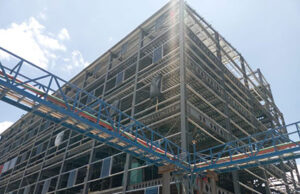
Steel Multi-storey - Structural steel works

Today’s industrial investors are prioritizing facilities that can:

  • Support specialized production flows
  • Accommodate automation and material handling
  • Integrate future crane systems
  • Allow phased expansion
  • Reduce project timelines
 

This makes steel the ideal structural solution.

Why Steel Is the Best Choice for Factory Construction in Zambia

       1) Faster Construction Means Faster Revenue Generation

In manufacturing, delayed building completion often means delayed machinery installation, delayed contracts, and delayed cash flow. Steel structures are fabricated off-site and erected quickly, significantly reducing on-site construction time.

Compared to concrete, steel buildings can often be operational within weeks rather than months, helping manufacturers accelerate commissioning and reduce time-to-market risk.

For fast-moving industrial projects, this speed becomes a competitive advantage.

        2) Clear-Span Layouts Improve Production Flow

Factory efficiency starts with layout efficiency. Steel portal frames allow large clear spans without internal columns, creating uninterrupted production floors that improve:

  • Machinery placement
  • Conveyor routing
  • Forklift circulation
  • Warehousing
  • Raw material staging
  • Finished goods dispatch
Steel Multi-storey - Structural steel works

This is especially important for agro-processing plants, assembly lines, packaging facilities, and mining equipment workshopsA clear-span steel factory allows the building to adapt to the production process instead of forcing the process around structural limitations.

         3) Lower Cost per Square Metre and Better ROI

For large industrial buildings, steel often delivers better total project economics than concrete alternatives.

The cost advantage comes from:

  • Lighter structural weight
  • Smaller foundation requirements
  • Reduced labour time
  • Shorter project timelines
  • Lower disruption on active industrial sites
 

For manufacturers managing capital expenditure carefully, this translates into lower cost per square metre and stronger long-term return on investment.

         4) Steel Buildings Are Designed for Future Expansion

One of the biggest strategic mistakes in industrial construction is designing only for current demand. Manufacturing volumes evolve. New machinery is added. Storage needs expand. Crane systems become necessary.

Steel buildings make future changes significantly easier by allowing:

  • Side extensions
  • Length extensions
  • Overhead crane retrofits
  • Mezzanine additions
  • Process line re-configuration
  • Wall repositioning
 

This protects the long-term value of the original investment.

Key Design Considerations for Steel Factory Buildings in Zambia

A high-performing factory building should be engineered around the production process, not just dimensions.

Critical planning factors include:

  • Production flow: layout should align with raw material to dispatch movement
  • Clear height: based on machinery, racking, and forklift requirements
  • Crane provision: integrate crane beams early if future lifting systems are likely
  • Ventilation systems: essential for heat, fumes, or dust-heavy operations
  • Floor loading: reinforced pads for heavy machinery
  • Expansion strategy: future-proof the frame for easy growth
 

This consultative engineering approach is where steel buildings outperform generic construction models.

Common Mistakes Manufacturers Make When Planning Factory Buildings

Several avoidable design errors can increase future operating costs:

  • Designing the building before mapping production flow
  • Underestimating clear height needs
  • Ignoring future crane requirements
  • Insufficient floor slab reinforcement
  • Failing to allow for future extensions
  • Overlooking ventilation requirements
 

The most successful factory projects begin with process-first structural planning.

Steel Factory Building vs Concrete Construction in Zambia


Factor

Steel Frame

Concrete Alternative

Production floor layout

Large clear spans, no internal columns

More internal columns

Crane integration

Easily integrated into steel frame

More complex and costly

Construction speed

Fast erection

Slower curing and build time

Future expansion

Easy to extend or modify

Difficult and expensive

Foundation requirements

Lighter, smaller foundations

Heavy groundworks

Operational disruption

Minimal

Higher on active sites

For manufacturers prioritizing flexibility and speed, steel consistently delivers stronger strategic value.

Why Zenith Steel for Factories in Zambia

Zenith Steel Fabricators delivers industrial steel buildings across 14 African countries including Zambia. With an annual fabrication capacity of 40,000 metric tonnes and nearly five decades of experience, Zenith provides factory buildings designed around the specific requirements of each manufacturing operation.

Contact Zenith Steel to discuss your factory project in Lusaka, the Copperbelt, or elsewhere in Zambia.

Frequently Asked Questions

        i) How fast can a steel factory be built?

Project timelines depend on the scope, size, and site conditions of your project. Our engineering team will provide a detailed schedule during the planning phase. Project timelines are confirmed by our engineering team based on project scope, site conditions, and location. Contact Zenith Steel to discuss your project.

       ii) Can steel factories accommodate overhead cranes?

Yes. The steel frame can be designed to support overhead cranes of various capacities.

      iii) Does Zenith deliver to Zambia?

Yes. Zenith Steel serves Zambia. Transport logistics are managed as part of the project.

      iv) Can Zenith Steel integrate overhead crane systems into a factory building?

Yes. Zenith has extensive experience designing and fabricating crane buildings, from light-duty workshop cranes to heavy EOT (electric overhead travelling) cranes. The crane beams and supporting structure are designed as part of the overall building system, ensuring the building can safely carry the crane loads.

       v) Does Zenith Steel handle factory fit-out, or just the steel structure?

Zenith Steel specializes in the structural steel building – the portal frame, roof, cladding, and any integrated crane beams. Mechanical, electrical, and process equipment fit-out is typically handled by specialist contractors. Zenith coordinates with the project team to ensure the building structure accommodates the fit-out requirements.

Leave a Reply

Your email address will not be published. Required fields are marked *