

Steel Factories and Production Facilities in Rwanda: What Manufacturers Need From Their Building
Rwanda’s Industrial Expansion and Demand for Faster Factory Construction
Rwanda is rapidly positioning itself as one of East Africa’s most attractive industrial growth markets. From agro-processing and textiles to packaging, pharmaceuticals, and light manufacturing, investors are increasingly choosing Rwanda as a strategic production base for regional trade. As this industrialization agenda accelerates, one capital decision has become mission-critical: how quickly and efficiently a manufacturer can develop its factory building.
The facility itself directly affects production flow, equipment layout, expansion capacity, operational uptime, and long-term cost efficiency. For this reason, steel factory buildings in Rwanda are emerging as the preferred construction solution. Compared to conventional concrete or masonry, steel structures offer:
- Faster project delivery
- Lower total cost per square metre
- Large clear-span production spaces
- Easier crane and machinery integration
- Simplified future expansion
- Better lifecycle ROI
For manufacturers entering Rwanda’s Special Economic Zones or scaling existing operations, the right steel building strategy can significantly reduce time-to-production while protecting long-term capital investment. Zenith Steel’s industrial construction expertise across Rwanda and the wider African market makes steel the ideal fit for these high-performance manufacturing environments.
Rwanda’s Manufacturing Growth: Why the Factory Building Decision Matters Early
Rwanda’s industrial strategy continues to attract both local and international manufacturers through:
- Investment incentives
- Improved transport infrastructure
- Export-focused industrial parks
- Special Economic Zones (SEZs)
- Regional market access into East and Central Africa
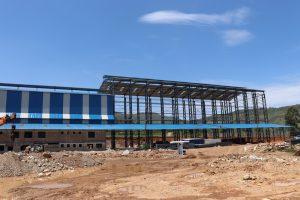
For most industrial investors, the factory building is among the first major fixed-capital expenditures. This means early design decisions around span, clear height, crane support, utilities coordination, and future expandability will influence:
- Capital expenditure efficiency
- production speed
- operational workflow
- maintenance cost
- future scalability
Why Steel Factory Buildings in rwanda Outperform Concrete structures
1) Faster Speed to Operations
Steel factory buildings are fabricated off-site and assembled rapidly on location. This off-site manufacturing model dramatically shortens the construction timeline compared to concrete structures that require curing, wet flooring, and longer foundation timelines. For manufacturers with strict launch deadlines, every month saved in construction translates directly into:
- faster production start
- earlier revenue generation
- reduced financing costs
- faster market entry
This is particularly important for businesses operating under SEZ timelines or investor-backed expansion milestones.
2) Large Clear-Span Interiors for Efficient Production Layouts
Modern manufacturing relies on uninterrupted workflow. Steel portal frame systems can achieve 20m, 30m, and even larger clear spans without internal columns, allowing full flexibility for:
- automated production lines
- conveyor systems
- packaging stations
- warehousing zones
- forklift movement
- assembly cells
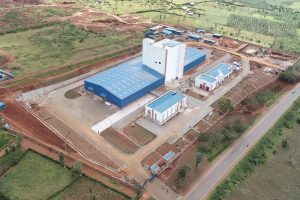
The result is a layout optimized around throughput rather than structural compromise. This is where Zenith Steel’s factory building expertise adds major value, designing the structure around the production process itself.
3) Lower Total Project Cost Per Square Metre
For single-storey industrial buildings, steel often delivers a lower total installed cost than concrete due to:
- lighter structural loads
- smaller foundation requirements
- shorter labour duration
- faster installation
- reduced site overheads
Beyond direct construction savings, faster commissioning reduces the cost of delayed production, which is often the largest hidden expense in industrial expansion.
4) Future-Proof Expansion Flexibility
Manufacturing operations rarely stay static. As demand grows, businesses may need to:
- add production bays
- increase storage capacity
- install overhead cranes
- raise roof clearances
- integrate mezzanine service floors
- reconfigure dispatch zones
Steel structures make these future upgrades significantly easier than concrete buildings. This adaptability makes steel especially attractive for Rwanda’s fast-evolving industrial sectors where product lines and production technologies shift quickly.
Design Considerations for Factories in Rwanda
A high-performing steel factory building should be engineered around operational logic. Key design variables include:
- Production flow – the building layout should follow the logical flow of raw materials in, processing, and finished goods out
- Clear height – determined by the tallest equipment plus operational clearance
- Floor loading – heavy machinery may require reinforced foundation pads within the slab
- Crane provision – if overhead cranes are needed, the steel frame must be designed to carry the crane loads
- Ventilation and extraction – factories generating heat, dust, or fumes need purpose-designed ventilation
- Electrical and services distribution – coordinate with the structural frame for efficient routing
- Expansion – design the initial building to allow future extension without major structural modification
Cost of a Steel Factory Building in Rwanda
- Building footprint and eave height
- Structural span and loading requirements
- External finishes specification
- Floor slab design (including any reinforced pads for heavy equipment)
- Overhead crane provision (if applicable)
- Services integration (electrical, plumbing, extraction)
- Import logistics and transport to Rwanda
Common Factory Building Mistakes Manufacturers Make
The biggest project risks usually come from poor alignment between the building and the production model. Common mistakes include:
- Designing the building without fully understanding the production process it needs to house
- Not allowing enough clear height for equipment and material handling
- Failing to plan for overhead cranes at the design stage – adding them later is extremely costly
- Underestimating foundation requirements for heavy machinery
- Poor ventilation planning
- Inadequate loading bay access
- Not planning for expansion – no provision for future building extensions
Zenith Steel’s design-build approach helps manufacturers solve these risks early in the concept phase.
Pro Tips for Manufacturers Planning a Factory in Rwanda
To maximize ROI and operational flexibility:
- Involve the steel fabricator early in the project – before finalizing production layouts
- Design the building around the production flow, not the other way around
- If overhead cranes might be needed in the future, include crane rails in the original design even if the cranes are not installed immediately
- Specify insulated panels if the factory will generate significant internal heat
- Plan vehicle access for raw material delivery and finished goods dispatch as part of the building design
Steel vs Concrete Factory Buildings
Manufacturing and processing facilities have specific structural requirements. Here is how steel compares to concrete for factory construction in East Africa:
Factor | Steel Frame | Concrete / Alternative |
Clear-span production floor | Large spans without internal columns, enabling a free and highly efficient production layout | More internal columns required, which can constrain production flow and equipment positioning |
Crane integration | Crane beams can be integrated directly into the structural frame during design | Cranes can be incorporated, but integration is more complex and costly |
Construction speed | Fast off-site fabrication and on-site erection, minimising downtime for operational projects | Slower construction process that may disrupt existing operations on active sites |
Future production changes | Easy to modify by moving walls, adding cranes, extending bays, or reconfiguring layouts | Difficult and expensive to modify once complete |
Foundation requirements | Lighter structural loads reduce foundation size and overall groundworks cost | Heavier structural mass requires more extensive foundations and site preparation |
Regulatory compliance | Fully compliant with local building codes when properly engineered and certified | Standard approach that is widely accepted across industrial projects |
Why Zenith Steel for Factories in Rwanda
Zenith Steel Fabricators has been building industrial steel structures since 1977. With an annual fabrication capacity of 40,000 metric tonnes, Zenith erects factory buildings designed for Rwanda’s growing manufacturing sector.
Zenith’s structural steelworks division fabricates portal frames, crane beams, purlins, and all associated components for factory buildings. Each project is designed around the manufacturer’s specific production requirements, not adapted from a generic template.
Contact Zenith Steel’s Kigali office to discuss your factory building project in Rwanda.
Frequently Asked Questions
i) How quickly can a steel factory be built in Rwanda?
The steel structure can typically be erected in four to eight weeks. Project timelines are confirmed by our engineering team based on project scope, site conditions, and location. Contact Zenith Steel to discuss your project.
ii) Can steel buildings accommodate overhead cranes?
Yes. Steel portal frames can be designed to support overhead cranes of various capacities. The crane rails and supporting steelwork are integrated into the building’s structural design.
iii) Is a steel factory cheaper than concrete in Rwanda?
For single-storey industrial buildings, steel typically offers a lower cost per square metre and faster construction. The lighter weight also reduces foundation costs. Request quotations for both approaches to compare for your specific project.
iv) Can a steel factory be expanded later?
Yes. Steel buildings are inherently modular, and additional bays or wings can be added to expand the factory floor. This is one of the key advantages of steel over concrete for manufacturing facilities.
v) Can Zenith Steel integrate overhead crane systems into a factory building?
Yes. Zenith has extensive experience designing and fabricating crane buildings, from light-duty workshop cranes to heavy EOT (electric overhead travelling) cranes. The crane beams and supporting structure are designed as part of the overall building system, ensuring the building can safely carry the crane loads.
vi) Does Zenith Steel handle factory fit-out, or just the steel structure?
Zenith Steel specializes in the structural steel building – the portal frame, structural envelope, and any integrated crane beams. Mechanical, electrical, and process equipment fit-out is typically handled by specialist contractors. Zenith coordinates with the project team to ensure the building structure accommodates the fit-out requirements.
