

Steel Warehouses and Pallet Racking for Nairobi’s Industrial and Distribution Sector

Why Warehouse Design Has Become a Strategic Growth Lever in Nairobi

Nairobi has rapidly evolved into East Africa’s leading logistics, manufacturing, and regional distribution gateway, supporting trade flows across Kenya and into Uganda, Rwanda, South Sudan, Tanzania, and the wider Great Lakes region. As import volumes rise, e-commerce expands, and manufacturers scale regional operations, the role of the warehouse is shifting from a simple storage building into a strategic operational asset.

For logistics operators, FMCG distributors, manufacturers, exporters, and third-party warehousing providers, the right facility design now directly influences:

  • storage density
  • turnaround speed
  • forklift productivity
  • SKU accessibility
  • expansion readiness
  • long-term operating cost
 

This is why leading developers are increasingly investing in steel warehouse buildings integrated with engineered pallet racking systems. At Zenith Steel, the most successful warehouse projects are never designed as “just buildings.” They are developed as fully integrated storage ecosystems, where the steel portal frame, slab, loading bays, roof height, mezzanine systems, and racking layouts work together as one high-performance logistics asset.

This guide explores how Nairobi businesses can approach warehouse construction and pallet racking design strategically for scale, efficiency, and profitability.

Why Steel Warehouses Continue to Lead Industrial Construction in Nairobi

        1) Faster Time to Operational Readiness

In logistics, speed directly impacts revenue captureSteel warehouses are fabricated off-site at Zenith Steel’s controlled production facilities, then assembled rapidly on-site. Compared to masonry or concrete alternatives, this dramatically shortens project timelines.
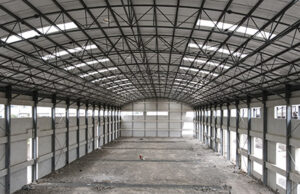
Warehouse curved roof

The business implication is clear:

  • faster tenant occupation
  • quicker inventory onboarding
  • reduced construction disruption
  • earlier revenue generation
 

For Nairobi’s fast-moving industrial zones such as Embakasi, Mlolongo, Athi River, and Ruiru, this speed advantage is often decisive.

        2) Large Clear Spans for Better Racking Efficiency
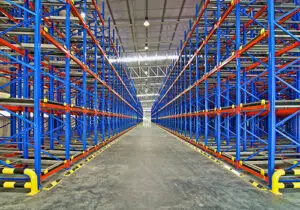
Warehouse Racking storage System - Pallet racking solutions 

Warehouse productivity depends on usable cubic volume, not just floor areaZenith Steel’s steel portal frame warehouses routinely achieve 20–40 metre clear spans or more, creating column-free interiors that allow:

  • uninterrupted selective racking rows
  • easier forklift circulation
  • higher pallet position density
  • safer goods movement
  • improved loading dock alignment
 

This translates directly into higher storage utilization and lower cost per pallet position.

        3) Scalability for Growing Distribution Networks

The best warehouse designs are built for future capacity expansionAs Nairobi businesses scale regional distribution into neighbouring countries, storage needs often outgrow the original footprint. Steel structures make this easier because additional bays can be added with minimal disruption.

Zenith Steel’s modular systems allow clients to:

  • extend warehouse length
  • increase loading bays
  • add mezzanine storage
  • integrate new racking zones
  • repurpose sections for manufacturing or cold storage
 

This flexibility protects long-term capital investment.

        4) Durability in Nairobi’s Industrial Climate

Nairobi’s seasonal rains, temperature shifts, and heavy logistics usage require durable structures. Zenith Steel’s galvanized warehouse steel systems are engineered for:

  • corrosion resistance
  • long service life
  • termite resistance 
  • reduced repainting cycles
  • minimal structural maintenance
 

For industrial developers, this means lower lifecycle costs and stronger ROI over decades.

Understanding Pallet Racking Systems

The warehouse building creates the space. The racking system determines how profitably that space is usedChoosing the wrong system can reduce storage density, slow picking, and increase forklift travel time.

       1. Conventional Pallet Racking: Best for SKU (Stock Keeping Unit) Flexibility

Conventional-Pallet-Racking

This remains the most common system in Nairobi warehouses. Every pallet is directly accessible, making it ideal for:

  • FMCG distributors
  • pharmaceutical warehousing
  • retail replenishment hubs
  • spare parts inventory
  • mixed-SKU import businesses
 

Strategic advantage: Best for fast-moving warehouses with high stock variety and frequent rotation.


         2. Drive-In / Drive-Through Racking: Best for Density

For operations holding large quantities of identical SKUs, density matters more than accessibility. This system reduces aisle count and increases pallet positions.
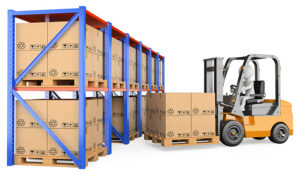
drive-in pallet racking

Best for:

  • beverage distributors
  • food processors
  • cold rooms
  • bulk importers
  • manufacturing raw materials
 

Strategic advantage: Maximizes space ROI per square metre.


          3. Cantilever Racking: Best for Long and Irregular Loads
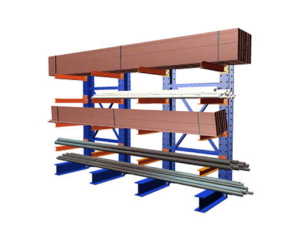
Cantilever Pallet Racking

Zenith Steel also supports industrial clients handling:

  • pipes
  • timber
  • steel sections
  • metal profiles
  • cable drums
  • rolled materials
 

Cantilever systems provide safer, more efficient storage for non-standard loads.

Designing Warehouse and Racking Together

A common mistake is designing the warehouse first, then forcing racking into the available space. The better approach is integrated engineeringZenith Steel aligns the following from day one:

  • Building Height – Determines number of pallet levels and forklift requirements.
  • Column Spacing – Must align with the racking layout to avoid wasted space
  • Floor Slab Design – Critical for concentrated point loads from racking uprights and forklifts.
  • Dock and Door Placement – Must support optimal goods flow.
  • Fire Protection – Sprinkler clearances, aisle widths, and evacuation routes must be integrated early.
 

This approach reduces redesign costs and eliminates wasted floor area.

Key Cost Drivers for Steel Warehouses and Racking in Nairobi

For the warehouse building:

  • Floor area and eave height
  • Span width and number of bays
  • External finishes specification
  • Number and type of loading docks
  • Floor slab thickness and finish
  • Site preparation and foundation requirements
 

For pallet racking:

  • Type of racking system (conventional, drive-in, cantilever, etc.)
  • Number of pallet positions required
  • Height of the racking and number of levels
  • Load capacity per pallet position
  • Accessories (wire decking, beam safety clips, column guards, labels)

Common Warehouse Design Mistakes

Businesses can significantly improve project ROI by avoiding these mistakes:

  • Designing the building without considering the racking layout
  • Specifying a floor slab that cannot support loaded racking and forklift traffic
  • Not accounting for future growth in storage capacity
  • Choosing racking based solely on price without assessing quality and load ratings
  • Ignoring fire safety requirements for high-bay racking installations
  • Positioning loading docks without considering the flow of goods through the warehouse
 

These mistakes often create long-term operational inefficiencies that far outweigh initial savings.

Steel Portal Frame vs Concrete Frame for Warehouses in East Africa

Both steel and concrete are proven systems for warehouses and industrial buildings. Here is how they compare for logistics and industrial projects in East Africa:


Factor

Steel Frame Warehouse

Concrete / Conventional Alternative

Column-free span

Large clear spans that maximise usable floor area and improve racking flexibility

Shorter spans that often require more internal columns, reducing usable space

Construction speed

Fast, with prefabricated frames erected quickly on site

Slower due to formwork, reinforcement, pouring, and curing cycles

Foundation requirements

Lighter structure requiring smaller and more cost-efficient foundations

Heavier structure needing larger and deeper foundations

Future expansion

Straightforward to extend by adding new bays to the existing structure

Very difficult and costly to expand once completed

Floor loading performance

Same performance, as floor slab design is independent of the frame system

Same performance, depending on slab specification

Long-term versatility

Easy to modify, extend, repurpose, or reconfigure for new operations

More fixed layout with costly structural changes

Pro Tips for Warehouse Operators and Developers

To maximize long-term value, ensure the following:

  • Start with a Storage Flow Study – Design around pallet sizes, turnover rates, and forklift routes. Work on a storage needs analysis before specifying racking – your actual pallet dimensions and weights should drive the design.
  • Build for Vertical Growth – Specify a minimum eave height of 8 to 10 metres for standard pallet racking operations
  • Engineer the Slab for Operational Reality – Forklift loads, rack anchors, and traffic lanes must be factored in.
  • Future-Proof Capacity – Expansion later is far costlier than adding strategic excess capacity now.
  • Choose an Integrated Steel + Racking Partner – One supplier reduces coordination gaps and protects performance outcomes. 
 

This is where Zenith Steel’s end-to-end industrial building expertise becomes commercially valuable.

Why Zenith Steel for Warehouses and Racking in Nairobi

Zenith Steel Fabricators is one of the leading companies in East Africa that can deliver both the warehouse building and the internal racking system. Zenith’s warehouse division fabricates portal frame steel buildings of any size, while Zen Racks – Zenith’s pallet racking product line – provides conventional, drive-in, cantilever, and custom racking solutions.

With fabrication facilities in Nairobi’s Industrial Area and an annual capacity of 40,000 metric tonnes, Zenith handles projects from single-bay storage buildings to large-scale distribution centres. The integrated approach means the building and racking are designed together from the outset, eliminating the coordination problems that arise when separate suppliers are involved.

Contact Zenith Steel to discuss your warehouse and racking requirements in Nairobi or anywhere in Kenya.

Frequently Asked Questions

      i) How long does it take to build a steel warehouse in Nairobi?

Project timelines depend on the scope, size, and site conditions of your project. Our engineering team will provide a detailed schedule during the planning phase.

     ii) Can racking be installed in an existing warehouse?

Yes, provided the floor slab can support the loads and the clear height is sufficient. A structural assessment of the existing floor should be carried out before specifying racking for a building that was not originally designed for it.

    iii) What is the typical lifespan of a pallet racking system?

Quality steel pallet racking, properly installed and maintained, can last for many years or more. Regular inspections and prompt replacement of damaged components are essential to maintaining safety and longevity.

     iv) How many pallets can a standard warehouse hold?

Storage capacity depends on the floor area, clear height, racking type, and pallet dimensions. As a rough guide, a well-designed 2,000 square metre warehouse with selective racking and multiple levels can hold a significant number of standard pallets, depending on racking configuration, layout, and pallet dimensions.

      v) Should I choose conventional or drive-in racking?

If you handle many different products with frequent stock rotation, conventional racking is the better choice. If you store large quantities of the same product with a last-in, first-out retrieval pattern, drive-in racking provides higher storage density.

     vi) Does Zenith Steel design both the warehouse structure and the internal racking layout?

Yes. Zenith delivers both the steel warehouse structure and the Zen Racks pallet racking system as an integrated package, ensuring the building dimensions, floor slab specification, and racking layout are coordinated from the outset. This eliminates the coordination problems that arise when the warehouse builder and racking supplier work from separate specifications.

    vii) What floor slab specification does a warehouse need to support pallet racking?

The floor slab must be engineered to carry the concentrated loads of loaded racking uprights and the dynamic loads of forklift traffic. The exact specification depends on the racking type, load per position, and forklift wheel loads. Zenith’s engineering team provides the floor loading requirements as part of the warehouse design process.

Leave a Reply

Your email address will not be published. Required fields are marked *