

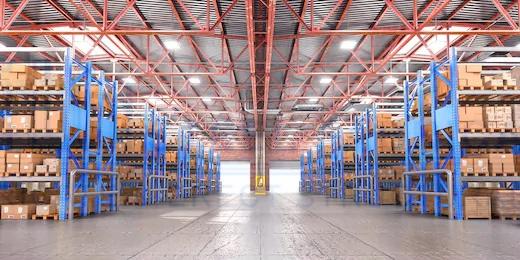
Warehouse and Racking Solutions for Mining and Industrial Operations in the DRC
The Democratic Republic of Congo remains one of Africa’s most resource-rich mining markets, supplying copper, cobalt, gold, coltan, and other minerals essential to global manufacturing and energy transition supply chains. Yet while extraction capacity continues to scale, one operational challenge remains consistently underestimated: on-site storage infrastructure.
For mining operators, warehouse inefficiencies directly translate into downtime, delayed maintenance cycles, inventory losses, and avoidable procurement costs. In remote DRC mine sites where supply chains are already stretched by long transport corridors, poor roads, and border delays, the inability to quickly access a critical spare part can halt production and significantly affect output targets.
This is where Zenith Steel Fabricators steel warehouses, integrated with heavy-duty industrial racking systems, become more than storage buildings, they become strategic enablers of operational continuity, asset protection, and long-term mine efficiency.
Why Mining Operations in the DRC Need Purpose-Built Steel Warehouses
Mining environments in the DRC present a unique combination of storage risks:
- Remote locations with limited infrastructure
- High rainfall and tropical humidity
- Exposure to dust, corrosion, and temperature fluctuations
- Storage of high-value mechanical parts
- Hazardous consumables such as oils, chemicals, and fuels
- Continuous forklift and equipment movement
Traditional temporary shelters or makeshift storage sheds often fail under these conditions. The result?
- Faster degradation of critical equipment
- Disorganized spare parts inventory
- Longer maintenance response times
- Increased theft and pilferage risks
- Higher total cost of ownership
A purpose-built steel portal frame warehouse from Zenith Steel solves these operational challenges by combining durability, speed of assembly, and scalability.
Steel Warehouses for the DRC Mining Sector
1) Durability in Harsh Mining Conditions
The DRC’s climate demands structures that can withstand:
- Heavy seasonal rains
- Persistent humidity
- Corrosion risks
- High daytime temperatures
Zenith Steel’s galvanized steel warehouses with high-performance roofing systems are engineered for long-term performance, reducing maintenance requirements while protecting sensitive mining inventory over the life of the operation.
2) Faster Deployment to Remote Mine Sites
A major challenge in Central African mining logistics is construction lead time in remote zones. Because Zenith Steel warehouses are prefabricated off-site and delivered in modular components, installation becomes significantly faster than conventional construction.
This reduces dependency on:
- Local material sourcing
- Skilled labour shortages
- Prolonged wet-weather construction delays
- Extended project mobilization costs
For mining operations, faster build times mean quicker operational readiness and earlier productivity gains.
3) Security for High-Value Mining Assets
Mining stores frequently hold:
- Pumps and motors
- Conveyor components
- Electrical systems
- PPE inventory
- Drilling accessories
- Critical maintenance tools
Steel-clad warehouse systems with reinforced access doors provide far stronger security than tents or temporary structures, reducing loss exposure and improving inventory control.
Heavy-Duty Racking Systems for Mining Warehouses
Warehouse efficiency is not only about the building, it is equally driven by the internal storage strategy. Zenith Steel’s industrial warehouse solutions pair steel buildings with heavy-duty pallet racking engineered for mining loads.
1. Conventional Pallet Racking for Spare Parts Management
This is ideal for:

- Pumps
- Bearings
- Motors
- Conveyor rollers
- Structural fittings
- Mechanical assemblies
The key advantage is direct access to every SKU, reducing search time during urgent repairs. For mining operations, this can dramatically shorten maintenance turnaround windows.
2. Cantilever Racking for Long Industrial Materials
Mining sites regularly store:
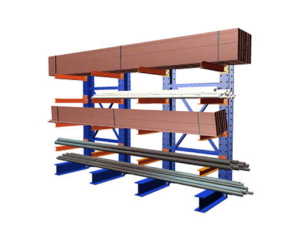
- Drill rods
- Steel pipes
- Conveyor shafts
- Structural steel sections
- Cable trays
Cantilever racking provides efficient storage for these long, irregular items while preserving floor space.
3. Drive-In Racking for Bulk Consumables
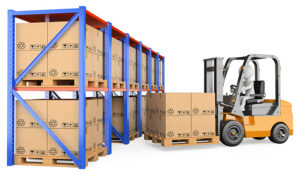
Where storage density matters most, drive-in racking helps maximize capacity for:
- Lubricants
- Oils
- Fasteners
- PPE stock
- Chemical pallets
- Packaged consumables
This is especially valuable where warehouse footprints are constrained by site layout.
key Design Considerations for DRC Mining Warehouses
What design choices most affect operational resilience and lifecycle cost? The answer lies in six priorities:
1) Floor Slab Capacity
The slab must accommodate:
- Loaded industrial racking
- Heavy pallet weights
- Forklift traffic
- Equipment movement
Poor slab design leads to structural failure and rack instability.
2) Vertical Clearance
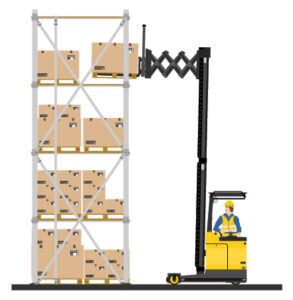
Higher clear spans enable:
- More racking levels
- Better cubic storage utilization
- Improved inventory density
- Future growth flexibility
This is one of the biggest ROI drivers in warehouse design.
3) Loading Access
Wide loading bays are essential for:
- Forklifts
- Container offloading
- Truck manoeuvring
- Emergency maintenance dispatch
4) Hazardous Material Segregation
Mining consumables often include flammable or hazardous materials. Zenith’s warehouse layouts can incorporate:
- Partitioned hazardous zones
- Isolated chemical bays
- Secure fuel storage sections
- Compliance-focused fire safety areas
5) Ventilation and Condensation Control
Without proper airflow, humidity can damage:
- Electrical components
- Lubricants
- Metal parts
- Packaging systems
Ventilated steel warehouse designs help preserve stock integrity.
6) Expansion Readiness
Mine operations evolve. Zenith Steel’s modular steel bays make future expansion straightforward, allowing operators to add storage as throughput grows.
factors Mining Companies Should Evaluate
For DRC mining warehouse projects, the major cost components include:
- Warehouse size and clear span
- Heavy-duty racking capacity
- Transport to remote mine sites
- Border and inland logistics
- Foundation design for local soil conditions
- Installation crew mobilization
- Fire and hazardous compliance requirements
The most overlooked cost variable is often transport logistics, especially for inland DRC locations.
Common Mistakes That Increase Mining Storage Costs
Mining operators can avoid unnecessary losses by steering clear of these issues:
- Using temporary sheds for permanent operations
- Choosing light-duty racking for industrial loads
- Ignoring transport route constraints
- Under-designing slabs for forklifts
- Failing to segregate chemicals and fuels
- Designing only for current stock volumes
Steel Portal Frame vs Concrete Frame for Mining Warehouses
Both steel and concrete are proven systems for warehouses and industrial buildings. Here is how they compare for logistics and industrial projects in East Africa:
Factor | Steel Portal Frame | Concrete Frame (Alternative) |
Column-free span | Large clear spans that maximize usable floor area and improve forklift movement | Shorter spans often require more internal columns, reducing usable storage space |
Construction speed | Fast installation through prefabricated components erected quickly on site | Slower due to formwork, reinforcement, pouring, and curing cycles |
Foundation requirements | Lighter overall structure, allowing smaller and more cost-effective foundations | Heavier system requiring larger and deeper foundations |
Future expansion | Straightforward to extend by adding bays to the existing structure | Difficult and disruptive to expand once completed |
Floor loading | Same performance as concrete since slab design is independent of the frame | Same performance depending on slab specification |
Long-term versatility | Easy to modify, repurpose, or extend as business needs change | More rigid layout with costly structural alterations |
Pro Tips
- Design the warehouse for the mine’s full operational life, not just current needs
- Specify heavy-duty racking from the outset – upgrading later is disruptive and expensive
- Plan transport logistics carefully, including road conditions and border crossings
- Include a parts management area adjacent to the racking for inspection and kitting
- Work with a supplier experienced in delivering to Central African mining operations
Why Zenith Steel for Mining Warehouses in the DRC
Zenith Steel Fabricators delivers both steel warehouse buildings and Zen Racks pallet racking systems, designed as integrated packages. With an annual fabrication capacity of 40,000 metric tonnes and experience delivering across 14 African countries including the DRC, Zenith has the capability to handle mining-sector warehouse projects in remote and challenging locations.
Contact Zenith Steel to discuss your mining warehouse and racking project in the DRC.
Frequently Asked Questions
i) Can Zenith deliver to mining sites in the DRC?
Yes. Zenith Steel has experience erecting structures across East and Central Africa, including the DRC. Transport logistics are managed as part of the project.
ii) How long does a mining warehouse take to build?
The steel structure can be erected efficiently on-site. Total project time including fabrication, transport, and site works depends on the location and scale.
iii) Can racking handle mining equipment weights?
Yes. Heavy-duty racking systems are available with load ratings suitable for industrial and mining applications. Load requirements should be specified during the design phase.
iv) Does Zenith Steel design both the warehouse structure and the internal racking layout?
Yes. Zenith delivers both the steel warehouse structure and the Zen Racks pallet racking system as an integrated package, ensuring the building dimensions, floor slab specification, and racking layout are coordinated from the outset. This eliminates the coordination problems that arise when the warehouse builder and racking supplier work from separate specifications.
v) What floor slab specification does a warehouse need to support pallet racking?
The floor slab must be engineered to carry the concentrated loads of loaded racking uprights and the dynamic loads of forklift traffic. The exact specification depends on the racking type, load per position, and forklift wheel loads. Zenith’s engineering team provides the floor loading requirements as part of the warehouse design process.
