

Warehouse Construction and Pallet Racking in Tanzania: A Guide for Logistics and Industrial Operators
Why Integrated Steel Buildings and Racking Systems Are the Next Competitive Advantage
Tanzania’s economy is being reshaped by one powerful force: trade. Anchored by the port of Dar es Salaam, one of East Africa’s most strategic logistics gateways, the country is handling growing cargo volumes serving not only its domestic market, but also landlocked economies such as Zambia, Malawi, DRC, Burundi, and Rwanda.
Yet while trade volumes are scaling rapidly, warehouse infrastructure has not kept pace. For logistics operators, manufacturers, and distributors, this gap presents both a challenge and a clear opportunity: investing in purpose-built steel warehouses with integrated pallet racking systems is a strategic lever for efficiency, scalability, and long-term competitiveness.
At Zenith Steel Fabricators, we see a clear pattern across East Africa: companies that align warehouse design, structural steel systems, and racking solutions outperform those relying on retrofitted or outdated facilities. This article outlines what decision-makers in Tanzania need to know.
The Structural Gap: Why Tanzania Needs Purpose-Built Warehousing
Much of Tanzania’s existing warehouse stock was designed decades ago as basic industrial sheds. These facilities typically fall short in key areas:
- Low eave heights, limiting vertical storage
- Under-engineered floor slabs, unsuitable for modern loads
- Inefficient loading dock configurations, slowing throughput
- Absence of pallet racking systems, forcing floor stacking

The result is predictable:
- Wasted cubic space
- Inefficient inventory management
- Higher product damage rates
- Increased operational costs
By contrast, modern steel warehouses with integrated racking systems can more than double storage capacity within the same footprint, while improving workflow efficiency and safety.
Steel Warehouse Construction: What High-Performance Looks Like
1. Portal Frame Design: Maximizing Usable Space
Modern warehouses rely on portal frame steel construction, which eliminates internal columns and creates clear-span interiors.
Why it matters:
- Enables optimal racking layouts
- Improves forklift movement
- Increases operational flexibility
Zenith Steel’s portal frame systems are engineered for long spans, durability, and rapid installation, making them ideal for Tanzania’s fast-moving logistics sector.
2. Clear Height: Unlocking Vertical Storage
Warehouse performance is no longer defined by floor area alone, but by usable volume.
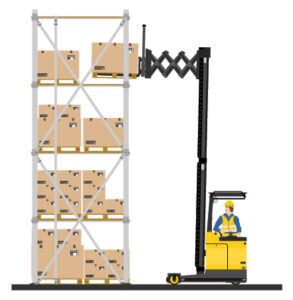
- Higher eave heights enable multiple racking levels
- Directly increase pallet positions per square metre
- Support future scalability without expanding footprint
Many operators underestimate this variable, yet it is one of the highest ROI design decisions.
3. Floor Slab Engineering: The Most Critical (and Overlooked) Element
The warehouse floor is not just a surface, it is a load-bearing system. It must support:
- Concentrated loads from racking uprights
- Dynamic loads from forklifts
- Continuous operational wear
A poorly designed slab can compromise the entire facility. Zenith Steel ensures engineered reinforced concrete slabs aligned with actual operational loads, not generic assumptions.
4. Loading Docks: Designing for Throughput, Not Convenience
Dock placement should reflect end-to-end goods flow, from receiving to storage to dispatch. Strategic dock design:
- Reduces internal travel distances
- Improves turnaround times
- Enhances overall warehouse productivity
Pallet Racking Systems: Choosing the Right Configuration
Selecting the right racking system depends on product type, throughput, and storage density requirements.
1. Conventional Racking (High Accessibility)

- Direct access to every pallet
- Ideal for diverse SKUs and fast-moving goods
- Most common solution for general warehousing
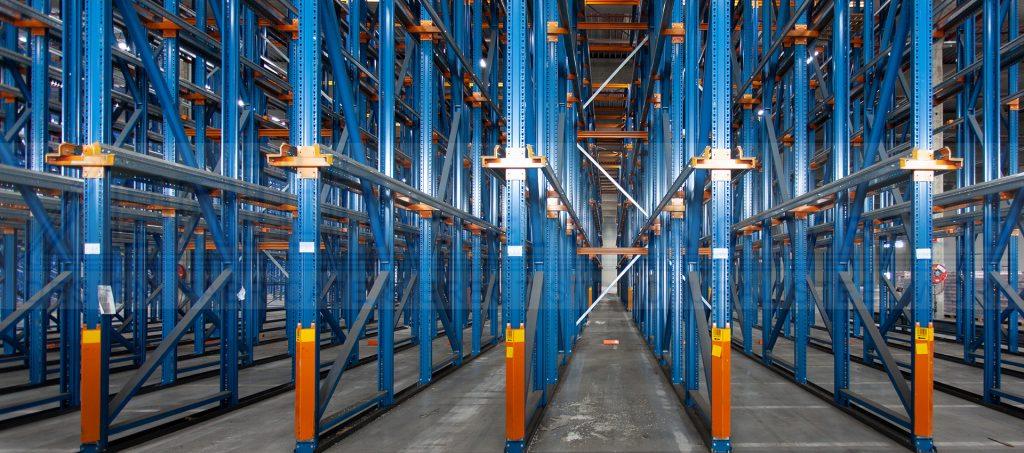
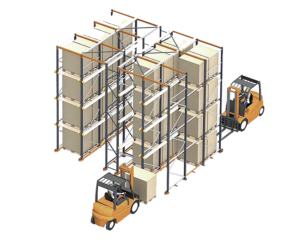
2. Drive-In Racking (Maximum Density)
- Fewer aisles, more pallet positions
- Suitable for bulk storage (e.g., beverages, FMCG, building materials)
- Best for low-SKU, high-volume operations
3. Cantilever Racking (Specialized Storage)
- Designed for long or irregular items
- Ideal for steel sections, timber, pipes, and construction materials
Design Warehouse and Racking as One System
The highest-performing warehouse operations in East Africa share one principle: integration beats retrofitting. When steel structure and racking are designed together, businesses unlock:
- Lower total project costs
- Higher storage efficiency
- Faster operational readiness
Key integration points are:
- Structural columns aligned with racking rows, not in the middle of aisles
- Floor slab engineered for actual load requirements
- Eave height matched to required number of racking levels
- Dock positioning optimized for goods flow
- Fire protection integrated with racking layout
- Lighting designed for aisle visibility
Zenith Steel Fabricators delivers this end-to-end integration, ensuring no costly misalignments.
Cost Drivers: What Influences Investment Decisions
Steel warehouse costs include:
- Floor area and building height
- Structural span and design complexity
- Roofing and cladding systems
- Floor slab specifications
- Loading dock quantity and type
- Site conditions (Dar es Salaam vs inland regions)
Racking system costs include:
- Type of system (selective, drive-in, etc.)
- Total pallet positions
- Height and number of levels
- Load capacity requirements
- Safety features and accessories
The lowest upfront cost rarely delivers the lowest lifecycle cost.
Common Mistakes to Avoid
Across Tanzania, several recurring issues undermine warehouse performance:
- Designing buildings first, then forcing racking to fit
- Under-specifying floor slabs that cannot support racking and forklift loads
- Choosing low-cost racking without verifying load ratings and safety compliance
- Ignoring future expansion needs
- Poorly positioned loading docks without analyzing goods flow
- Overlooking fire safety requirements for high-bay racking installations
These mistakes often lead to expensive retrofits or operational inefficiencies.
Pro Tips for Operators in Tanzania
To stay competitive in a fast-evolving logistics landscape:
- Conduct a professional storage needs analysis before selecting a racking system
- Integrate steel structure and racking systems together to avoid costly compromises
- Plan for 5-year growth, not current volumes
- Invest in proper slab engineering, it is costly to fix later
- Partner with a supplier like Zenith Steel Fabricators that delivers both warehouse structures and racking systems as an integrated package
Steel Portal Frame vs Concrete Frame: At a Glance
Both steel and concrete are proven systems for warehouses and industrial buildings. Here is how they compare for logistics and industrial projects in East Africa:
Factor | Steel Portal Frame | Concrete Frame (Alternative) |
Column-Free Span | Large clear spans – maximizes usable floor area and optimizes racking layouts | Shorter spans – requires more internal columns, reducing usable space |
Construction Speed | Fast – prefabricated components enable rapid on-site erection | Slow – involves formwork, reinforcement, pouring, and curing cycles |
Foundation Requirements | Lighter structure – smaller, more cost-effective foundations | Heavier structure – requires larger and deeper foundations |
Future Expansion | Straightforward – additional bays can be easily integrated | Difficult – structural modifications are complex and costly |
Floor Loading | Same performance – floor slab design is independent of frame type | Same performance – floor slab design is independent of frame type |
Long-Term Versatility | Highly flexible – easy to modify, extend, or repurpose | Limited flexibility – fixed layout, expensive to alter |
Why Zenith Steel for Warehouses and Racking in Tanzania
Zenith Steel erects warehouse buildings and Zen Racks pallet racking systems – designed and coordinated as a single package.
This integrated approach ensures that the building structure, floor slab, column spacing, and racking layout are all aligned from the design stage, avoiding the common problems that arise when the warehouse and racking are procured separately.
Frequently Asked Questions
i) How long does it take to build a warehouse in Tanzania?
Project timelines depend on the scope, size, and site conditions of your project. Our engineering team will provide a detailed schedule during the planning phase. Project timelines are confirmed by our engineering team based on project scope, site conditions, and location. Contact Zenith Steel to discuss your project.
ii) Can Zenith install racking in an existing warehouse?
Yes, provided the floor slab and clear height are adequate. A site assessment is recommended before specifying racking for a building that was not originally designed for it.
iii) What is the difference between selective and drive-in racking?
Selective racking provides direct access to every pallet – best for high-SKU operations. Drive-in racking maximises density by reducing aisles – best for bulk storage of uniform products.
iv) Does Zenith deliver to locations outside Dar es Salaam?
Yes. Zenith Steel serves Tanzania. Transport costs and logistics are factored into the project quotation based on the specific delivery location.
v) Does Zenith Steel design both the warehouse structure and the internal racking layout?
Yes. Zenith delivers both the steel warehouse structure and the Zen Racks pallet racking system as an integrated package, ensuring the building dimensions, floor slab specification, and racking layout are coordinated from the outset. This eliminates the coordination problems that arise when the warehouse builder and racking supplier work from separate specifications.
vi) What floor slab specification does a warehouse need to support pallet racking?
The floor slab must be engineered to carry the concentrated loads of loaded racking uprights and the dynamic loads of forklift traffic. The exact specification depends on the racking type, load per position, and forklift wheel loads. Zenith’s engineering team provides the floor loading requirements as part of the warehouse design process.
