

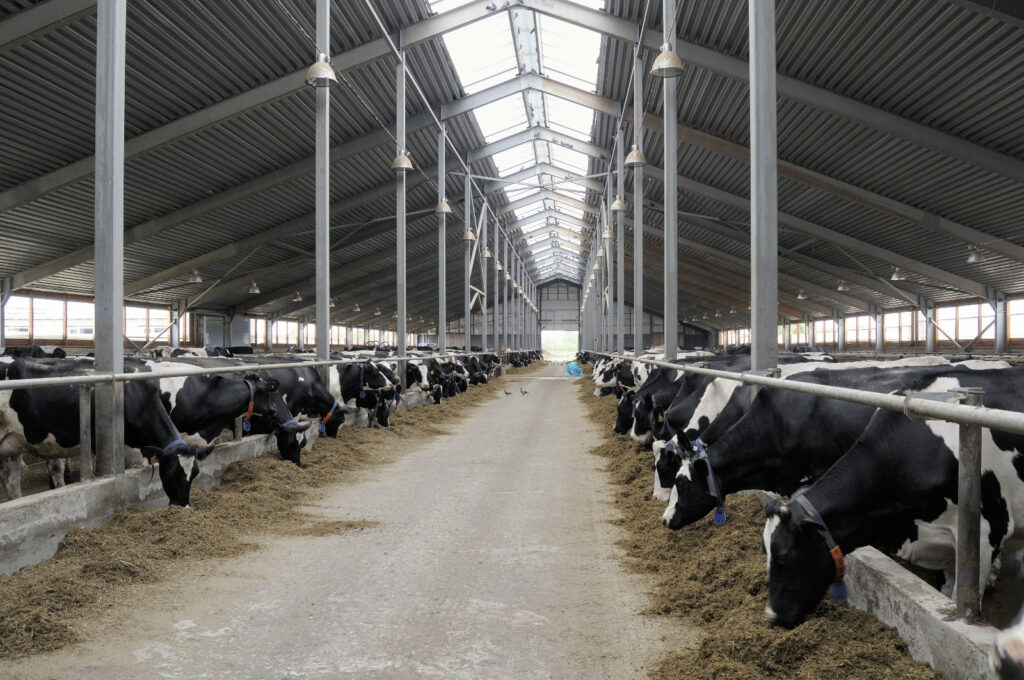
Why Kenya’s Dairy Farmers Are Switching to Steel Cow Barns
The Structural Shift Reshaping Kenya’s Dairy Productivity
Kenya’s dairy industry is entering a new phase of commercialization. As milk demand rises across urban centres and export-linked value chains, dairy farmers are under growing pressure to improve animal welfare, milk productivity, and operational efficiency. For many dairy farmers, the biggest hidden lever is no longer feed alone, it is infrastructure.
Across key dairy counties such as Nyandarua County, Nandi County, Uasin Gishu County, and Kiambu County, progressive farmers are replacing conventional timber and masonry livestock housing with purpose-built steel cow barns engineered for ventilation, longevity, and herd expansion. The economics are compelling: while timber barns may appear cheaper upfront, steel cow barns consistently outperform on lifecycle cost, construction speed, pest resistance, and herd health outcomes.
For dairy farmers planning long-term growth, the question is no longer whether to modernise housing, but which structure delivers the highest return over the next 20–30 years.
That is where Zenith Steel’s agricultural steel buildings are increasingly becoming the preferred solution across East Africa.
Kenya’s Dairy Industry Growth Is Increasing Demand for Better Livestock Infrastructure
Kenya remains East Africa’s largest milk producer, generating over 5 billion litres annually and supporting approximately 1.8 million smallholder farmers, alongside rapidly growing mid-scale and commercial dairy enterprises.

As dairy farming scales, the economics of poor housing become harder to ignore. Inadequate cow barns often lead to:
- Heat stress that suppresses milk yields
- Poor airflow that increases respiratory disease
- Wet flooring that contributes to mastitis and hoof infections
- Frequent repairs caused by termites and timber decay
- Space limitations that slow herd expansion
This is why steel livestock housing is moving from a “large-scale farm” solution to a strategic investment for ambitious dairy operations of every size.
Why Steel Cow Barns Deliver Better ROI Than Timber or Masonry
1) Lower Total Cost of Ownership Over Time
The biggest strategic advantage of steel is not just durability, it is cost predictability over decades. Traditional timber barns in Kenya’s humid and termite-prone zones often require:
- Frequent pest treatment
- Roof repairs
- Structural reinforcement
- Partial rebuilds within 10–15 years
By contrast, galvanized Zenith Steel cow barns are fabricated for long-term resilience against:
- Termites
- Rot
- Moisture
- UV exposure
- Seasonal weather extremes
This significantly reduces maintenance disruptions and makes the cost-per-year of use materially lower.
2) Better Ventilation = Better Milk Productivity
Poorly ventilated housing traps ammonia, moisture, and heat, creating stress conditions that lower feed conversion efficiency and milk production.
Zenith Steel’s clear-span cow barn systems support:
- Open-sided wall designs
- Ridge ventilation systems
- Elevated roof clearances
- Custom airflow zones
- Flexible side cladding options
The result is improved thermal comfort, healthier cows, and stronger production consistency.
3) Faster Build Timelines Reduce Downtime
For dairy farms, delayed construction translates into delayed productivity. Traditional masonry livestock buildings can take 3–6 months, depending on:
- Weather interruptions
- Brickwork labour availability
- Curing time
- Material supply chain delays
Zenith Steel cow barns are pre-engineered and fabricated off-site, allowing rapid on-site erection in a fraction of the time. This means farmers can:
- Move cattle in sooner
- Reduce temporary shelter costs
- Accelerate herd scaling
- Begin ROI recovery faster
4) Scalable Layouts for Growing Herd Sizes
One of the strongest commercial advantages of steel framing is modular expansion. Whether the current requirement is:
- 50 dairy cows
- 100-head housing
- 500+ commercial herd systems
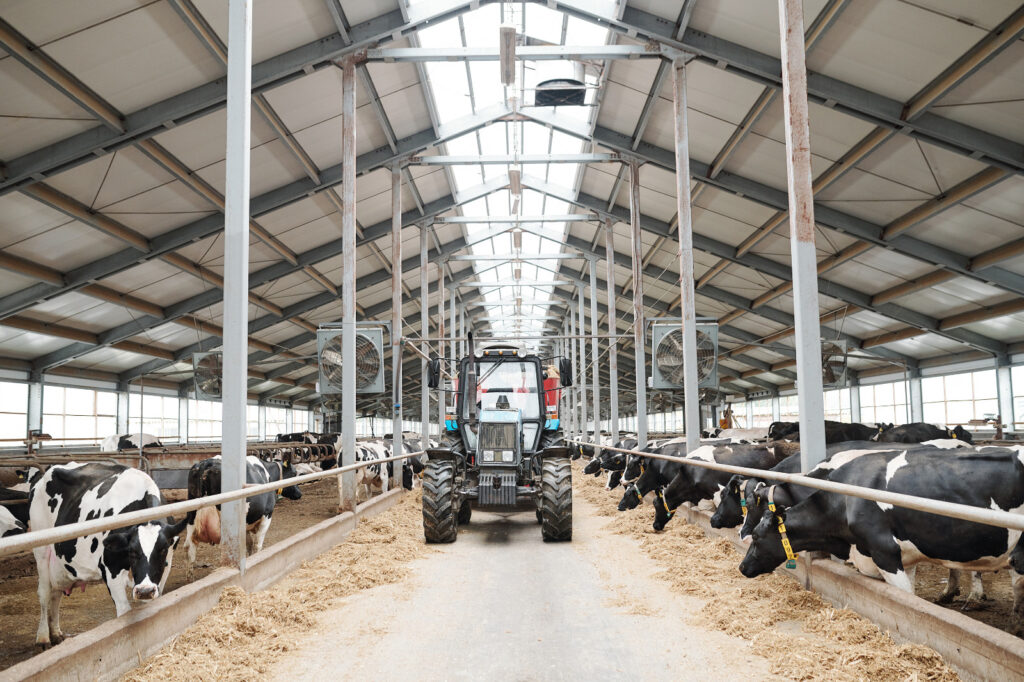
Zenith’s steel cow barns can be designed with future bay additions in mind, allowing seamless expansion without interrupting active operations. This makes steel ideal for farms transitioning from smallholder to commercial-scale production.
What Dairy Farmers Should Consider Before Building a Steel Cow Barn
1) Site and Soil Assessment
A high-performing steel cow barn starts with the right foundation strategy. Critical inputs include:
- Soil bearing capacity
- Drainage performance
- Manure flow direction
- Truck and feed access
- Rainfall runoff patterns
Zenith Steel’s project planning approach ensures the structure, foundations, and site workflow align from day one.

2) Functional Workflow Design
The best dairy structures are designed around movement efficiency. A modern barn should strategically separate:
- Feeding lanes
- Milking parlour bays
- Calf pens
- Resting cubicles
- Slurry drainage channels
- Feed storage areas
This is where Zenith’s expertise in practical farm workflow engineering creates real operational gains.
3) Climate-Responsive Design for Kenyan Regions
Kenya’s dairy zones differ significantly. For example:
- Highland counties need night-temperature protection
- Rift Valley farms need rainfall drainage optimization
- Warmer regions require maximum natural airflow
Zenith customizes cow barn structures to regional climate realities across East and Central Africa.
4) Compliance and Permits
Local county governments in Kenya have varying requirements for agricultural building permits. It is advisable to confirm permit requirements with the relevant county before commencing construction, particularly for larger commercial facilities.
Common Cost Drivers for Steel Cow Barns in Kenya
The total investment depends on:
- Size and span of the structure
- Type of steel (galvanized, painted, or coated)
- Roofing material and specification
- Foundation requirements based on soil and site conditions
- Inclusion of features like milking parlour bays, calf pens, or feed storage areas
- Delivery distance from the fabrication facility
While steel cow barns typically have a higher upfront cost than basic timber structures, the total cost of ownership is almost always lower when maintenance, durability, and livestock productivity are factored in over a long-term horizon.
Common Mistakes to Avoid
The most common planning errors include:
- Choosing price over lifecycle durability
- Under-designing ventilation systems
- Ignoring waste drainage early
- Failing to plan herd expansion
- Using general builders instead of agricultural steel specialists
- Skipping site surveys
Each of these mistakes can materially increase future operating costs.
Steel vs Timber vs Masonry Cow Barns in East Africa: A Comparative View
Before committing to a construction method, here is how steel compares against the two most common alternatives for livestock housing in East Africa:
Factor | Steel Frame | Timber | Masonry |
Construction speed | Fast – erected on-site in weeks | Moderate | Slow – months of bricklaying |
Durability | Very high – resists termites, rot, and weather damage | Low – highly vulnerable to termites and rot in tropical climates | High wall durability, but timber roof trusses remain a structural weakness |
Ventilation design | Fully customizable – open-span layouts, ridge vents, curtain walls | Limited by structural wall design | Limited by structural wall design |
Future expansion | Easy – additional bays can be added with minimal disruption | Difficult | Very difficult and expensive |
Pest resistance | Strong – termite and rodent resistant | High risk – requires regular pest treatment | Walls resistant, but roof structure remains vulnerable |
Total cost of ownership | Lower over the building lifecycle | Higher due to repairs, maintenance, and replacement | Moderate |
Pro Tips for Dairy Farmers Planning a Steel Cow Barn
- Start with a proper site assessment – soil type, drainage, and access roads all affect construction feasibility and cost
- Work with a fabricator who has specific experience in agricultural steel buildings, not just general construction
- Plan for future expansion from day one – adding bays to a steel structure is cost-effective if the original design allows for it
- Invest in proper roofing insulation to reduce heat gain, especially in warmer regions
- Consider integrating rainwater harvesting from the barn roof into your farm water supply
Why Zenith Steel for Dairy Farm Buildings in Kenya
Zenith Steel Fabricators has been fabricating steel structures in Kenya since 1977, with an annual production capacity of 40,000 metric tonnes. The company fabricates a range of agricultural buildings including cow barns, poultry sheds, and multi-purpose farm sheds – all designed for the specific conditions and requirements of East African farming.
Zenith delivers structures across Kenya that are engineered for durability, speed of assembly, and practical use in the field. Every cow barn project is designed around the farmer’s specific herd size, site conditions, and operational workflow.
Frequently Asked Questions
i) How long does it take to build a steel cow barn in Kenya?
Project timelines depend on the scope, size, and site conditions of your project. Our engineering team will provide a detailed schedule during the planning phase.
ii) Is a steel cow barn more expensive than a timber or masonry barn?
The upfront cost of a steel cow barn is generally higher than a basic timber structure. However, steel barns last significantly longer, require less maintenance, and provide better conditions for livestock – making them more cost-effective over the life of the building.
iii) Can a steel cow barn be extended later?
Yes. One of the key advantages of steel construction is that additional bays or wings can be added to the structure without major disruption to the existing building, provided the original design accommodates future expansion.
iv) What size of cow barn do I need for my herd?
The required barn size depends on herd size, breed, and the operational layout (feeding, milking, resting zones). As a general guide, dairy cattle require sufficient space per head in a well-designed housing facility. An experienced fabricator can help determine the optimal size based on your specific requirements.
v) Do I need a building permit for a cow barn in Kenya?
Permit requirements vary by county. For larger commercial facilities, a building permit is typically required. It is advisable to check with your local county government before commencing construction.
vi) Does Zenith Steel design the barn layout, or do we need to provide plans?
Zenith Steel’s engineering team handles the full design process, from site assessment to structural drawings. Farmers and investors provide their operational requirements – herd size, functional zones, site access – and Zenith’s team develops a building solution around them.
vii) Can a steel barn be built in phases as the farm grows?
Yes. One of the key advantages of steel construction is that additional bays can be added to the existing structure as the herd expands, provided the original design allows for future extension. Planning for phased growth from day one keeps future expansion costs low.
