

Ethiopia’s Commercial Poultry Boom: Why Farmers Are Building Steel Sheds at Scale
Quick answer: Ethiopia’s commercial poultry sector is shifting to steel sheds because they scale fast, withstand the country’s highland-to-lowland climate range, and support the biosecurity standards demanded by export buyers and supermarket supply chains. Standard layer houses serve 5,000-10,000 birds; broiler houses 20,000-50,000 per cycle. Build time: 6-10 weeks delivered. Costs: USD $14,000-$80,000.
From Subsistence to Scalable Poultry Production
Ethiopia’s poultry sector is at an inflection point. With a growing population and rising demand for affordable protein, poultry farming is rapidly transitioning from subsistence-level activity to a structured, commercial industry.
However, scaling production is not simply a matter of increasing flock size, it requires a fundamental shift in infrastructure. Housing, in particular, has emerged as the single most critical determinant of productivity, biosecurity, and long-term profitability.
This is where purpose-built steel poultry sheds, engineered by industry leaders like Zenith Steel Fabricators, are redefining what is possible. By combining precision engineering with durability and scalability, steel structures are enabling Ethiopian farmers to move from reactive farming to controlled, high-performance production systems.
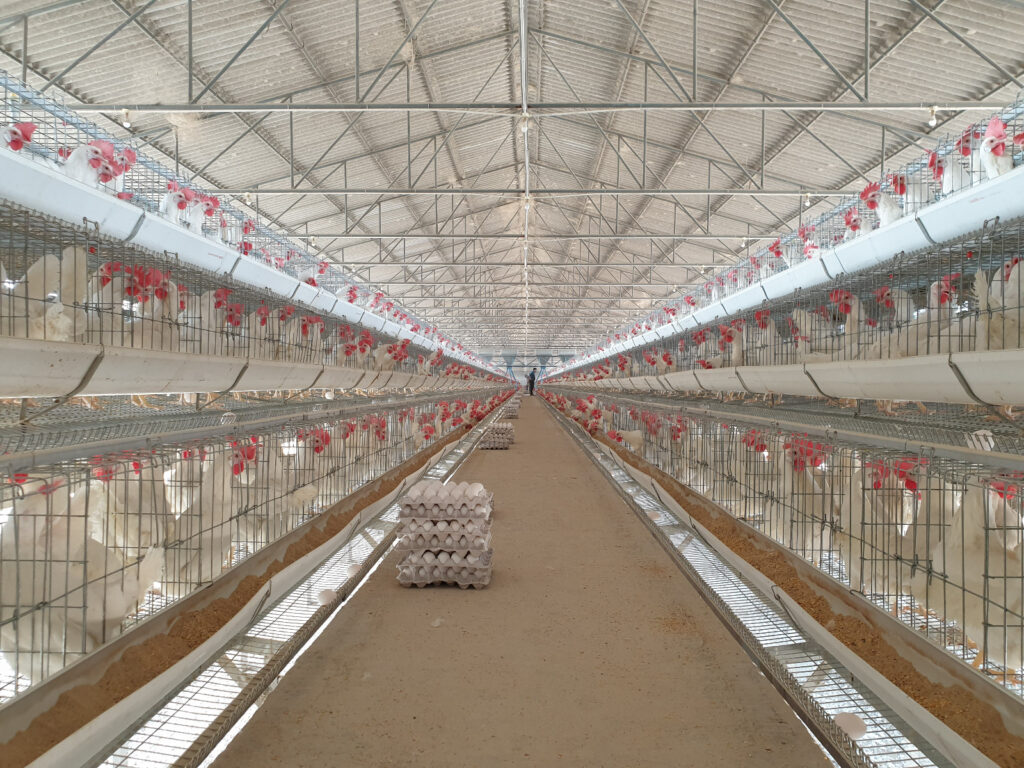
The Growth of Commercial Poultry farming in Ethiopia
Several macro trends are accelerating the growth of commercial poultry farming in Ethiopia:
- Population growth and urbanization driving consistent demand for eggs and chicken meat
- Rising middle-class incomes increasing protein consumption
- Government and private sector investment in agribusiness value chains
- Shift toward food security and import substitution
Yet, while demand is surging, supply-side efficiency remains uneven. Many producers still rely on traditional timber or mud structures, which limit flock performance and expose operations to significant risks.
The conclusion is clear: scaling poultry production requires industrial-grade infrastructure, starting with housing.
Why Steel Sheds for Commercial Poultry farming in ethiopia
1. Environmental Control: Optimizing bird performance
Poultry performance is highly sensitive to environmental conditions. Temperature fluctuations, poor airflow, and high humidity can directly impact:
- Feed conversion ratios
- Growth rates
- Egg production
- Mortality rates
Ethiopia’s varied climate, from the cool highlands of Addis Ababa to the hotter lowlands, makes environmental control even more critical.
Zenith Steel poultry sheds are engineered with:
- Adjustable curtain wall systems
- Ridge and sidewall ventilation
- Insulated roofing solutions
These features enable farmers to maintain optimal conditions without over-reliance on costly mechanical systems, improving both efficiency and profitability.
2. Biosecurity: Reducing operational risk
Disease outbreaks remain one of the biggest threats to poultry farming profitability. Steel structures provide a significant advantage:
- Non-porous surfaces that are easy to clean and disinfect
- Reduced pathogen retention compared to timber or mud
- Controlled access points to limit contamination
By integrating biosecurity into the building design, Zenith Steel Fabricators helps farmers reduce exposure to:
- Wild birds
- Rodents
- External contaminants
This results in healthier flocks and more predictable production cycles.
3. Scalability: Building for growth
Commercial poultry farming is inherently a scale-driven business. Farms are increasingly moving toward:
- 10,000+ bird units
- Multi-house operations
- Integrated production systems
Steel poultry sheds offer:
- Modular design and standardization
- Rapid replication across farm sites
- Flexibility to expand in phases
With Zenith Steel’s prefabricated systems, farmers can scale efficiently, adding new units as demand grows without redesigning infrastructure.
4. Speed of Construction: Time-to-production advantage
In commercial poultry farming, time directly impacts revenue. Steel sheds can be:
- Fabricated off-site
- Delivered ready for assembly
- Erected significantly faster than conventional buildings
This allows farmers to:
- Meet chick placement schedules
- Honour supply contracts
- Reduce downtime between production cycles
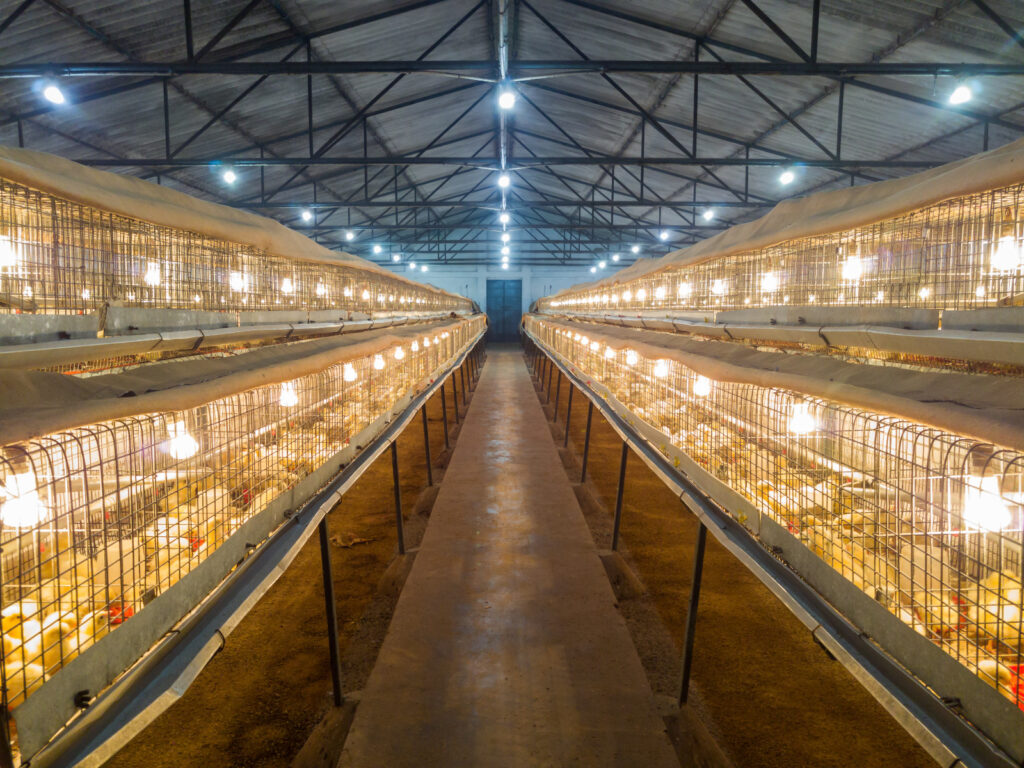
Key Design Considerations for Poultry Sheds in Ethiopia
A high-performance poultry shed is not just a structure, it is a precision production environment. Key design elements include:
1. Ventilation Systems
- Open-sided designs with curtain walls for natural airflow
- Tunnel ventilation systems for controlled environments
2. Insulated Roofing
- Minimizes heat gain from solar radiation
- Enhances bird comfort and productivity
3. Flooring Systems
- Concrete or compacted earth
- Designed for efficient litter management
4. Lighting Systems
- Supports controlled lighting programmes
- Directly influences growth and egg-laying cycles
5. Feeding and Watering Integration
- Layout must align with automated or manual systems
6. Waste Management Infrastructure
- Efficient litter removal pathways
- Dedicated manure handling zones
Zenith Steel Fabricators integrates these elements into fully customized designs, ensuring each shed aligns with the farmer’s production goals and local climate conditions.
Cost Drivers: What Determines Investment Levels
The cost of a steel poultry shed in Ethiopia depends on several strategic factors:
- Shed size (linked to flock capacity and stocking density)
- Ventilation system (natural vs tunnel)
- Roofing and insulation specifications
- Floor type and foundation requirements
- Equipment integration (feeders, drinkers, lighting systems)
- Site preparation and logistics
- Transport and delivery to remote farm locations
Rather than viewing cost in isolation, leading farmers evaluate return on investment (ROI), prioritizing long-term productivity over short-term savings.
Common Mistakes That Undermine Poultry Farm Performance
Even well-funded projects can underperform due to avoidable design and planning errors:
- Underestimating ventilation needs (the most critical performance factor)
- Overcrowding birds to reduce capital expenditure leading to higher mortality and lower performance
- Ignoring biosecurity in early design stages
- Selecting low-cost and low-durability materials
- Poor planning of farm logistics (feed delivery, egg collection, waste handling)
These missteps often result in higher operating costs, lower yields, and increased mortality rates.
Pro Tips for High-Performance Poultry Farming in Ethiopia
- Design for your climate zone: Highland and lowland regions require different ventilation strategies
- Invest in insulated roofing: It significantly improves bird comfort and output
- Plan for expansion early: Even if starting with one shed, design for a multi-unit layout
- Work with specialized fabricators: Poultry housing requires sector-specific expertise
- Adopt automation early: Retrofitting feeding and watering systems is costly and disruptive
Steel vs Timber vs Masonry: At a Glance
Before committing to a construction method, here is how steel compares against the two most common alternatives for livestock housing in East Africa:
| Factor | Steel Frame | Timber | Masonry |
| Construction Speed | Fast – erected on-site within weeks | Moderate | Slow – can take months due to bricklaying |
| Durability | Very high – resistant to termites, rot, and weathering | Low – highly vulnerable to termites and rot in tropical climates | High wall durability, but timber roof trusses remain a weak point |
| Ventilation Design | Fully customisable – supports open-span layouts, ridge vents, and curtain walls | Limited by structural constraints | Limited by structural walls and fixed openings |
| Future Expansion | Easy – additional bays can be added with minimal disruption | Difficult to modify or extend | Very difficult and costly to expand |
| Pest Resistance | Highly resistant to termites and rodents | High risk – requires ongoing chemical treatment | Walls are resistant, but roof structures remain vulnerable |
| Total Cost of Ownership | Lower over the building’s lifecycle due to minimal maintenance | Higher due to frequent repairs and replacements | Moderate – higher upfront cost with some long-term maintenance |
Why Zenith Steel for Poultry Sheds in Ethiopia
Zenith Steel Fabricators builds commercial poultry sheds designed for East African farming conditions. With nearly five decades of experience, an annual fabrication capacity of 40,000 metric tonnes, and delivery capability across 14 African countries including Ethiopia, Zenith provides the scale and expertise that commercial poultry operators need.
Every poultry shed is engineered for the specific requirements of the farm – climate zone, flock size, ventilation needs, and operational workflow. Zenith does not adapt generic industrial sheds for poultry use; the buildings are designed from the ground up for their intended purpose.
Contact Zenith Steel to discuss your poultry shed project in Ethiopia.
Frequently Asked Questions
i) What size shed do I need for 10,000 broilers?
At standard stocking densities, a commercial broiler shed should be sized according to stocking density guidelines and flock size, depending on the breed, climate, and management system. Consult with an experienced fabricator for precise specifications.
ii) Can Zenith deliver to Ethiopia?
Yes. Zenith Steel erects structures across East Africa including Ethiopia. All components are manufactured to specification and erected on-site. Logistics and transport are managed as part of the project.
iii) How long does a poultry shed take to build?
Project timelines depend on the scope, size, and site conditions of your project. Our engineering team will provide a detailed schedule during the planning phase. Project timelines are confirmed by our engineering team based on project scope, site conditions, and location. Contact Zenith Steel to discuss your project.
iv) Is a steel shed better than a block shed for poultry?
For commercial operations, steel sheds offer superior ventilation, faster construction, better biosecurity, and greater scalability. Block construction may suit very small operations but is not ideal for commercial scale.
v) Does Zenith Steel design the barn layout, or do we need to provide plans?
Zenith Steel’s engineering team handles the full design process, from site assessment to structural drawings. Farmers and investors provide their operational requirements – herd size, functional zones, site access – and Zenith’s team develops a building solution around them.
vi) Can a steel barn be built in phases as the farm grows?
Yes. One of the key advantages of steel construction is that additional bays can be added to the existing structure as the herd expands, provided the original design allows for future extension. Planning for phased growth from day one keeps future expansion costs low.