

Poultry Shed and Cow Barn Construction for Commercial Farmers in Uganda
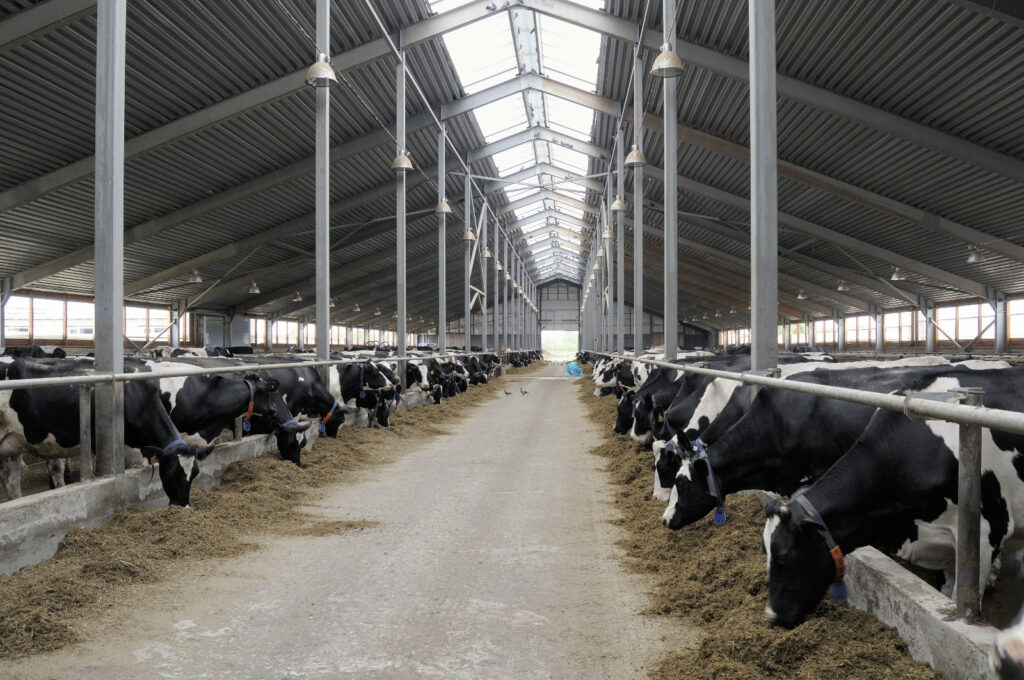
Quick answer: Steel poultry sheds and cow barns for Ugandan commercial farms deliver biosecure, well-ventilated structures that scale with herd or flock size. Standard layer houses run 12-15m wide for 5,000-10,000 birds; broiler houses go to 18m wide for 20,000-50,000 birds; cow barns serve 20-150 cows. Build times: 6-10 weeks delivery and assembly. Costs: USD $14,000-$95,000 depending on size and equipment level.
The Shift to Commercial Livestock Farming in Uganda
Uganda’s commercial farming sector is no longer a gradual growth, it’s a structural shift. Poultry and dairy are scaling rapidly, driven by urban demand, improved genetics, and increased private investment. But as operations expand, one constraint consistently undermines productivity: inadequate livestock housing.
For commercial farmers, the building is not just shelter, it is a core production asset. Poorly ventilated poultry sheds increase mortality and reduce feed conversion efficiency. Inadequate dairy barns suppress milk yields and elevate disease risk. The implication is clear: housing quality directly determines farm profitability.
This is where steel-framed livestock buildings, such as those delivered by Zenith Steel Fabricators Ltd, become a strategic advantage. This guide breaks down what commercial farmers in Uganda need to know about investing in steel poultry sheds and cow barns, and how to optimize for long-term returns.
Uganda’s Livestock Boom: A Structural Inflection Point
Uganda’s agriculture sector is undergoing a transition from subsistence to semi-commercial and fully commercial systems.
- Poultry: Rising demand for eggs and broiler meat in urban centers like Kampala is driving large-scale production.
- Dairy: The western “milk belt” is shifting toward high-yield breeds and structured feeding systems.

Traditional timber or mud structures fail under this new model:
- Limited airflow → heat stress and disease
- High maintenance → rising operational costs
- Poor scalability → growth problems
Why Steel for Poultry Sheds in Uganda
1. Ventilation control
Poultry farming is fundamentally about environmental control. Birds are highly sensitive to temperature, humidity, and ammonia levels.
Steel poultry sheds enable:
- Open-sided curtain wall systems
- Ridge ventilation for heat escape
- Optimized airflow without costly fans
Impact:
- Lower mortality rates
- Faster growth cycles
- Improved feed conversion ratios
2. Biosecurity
Disease outbreaks can wipe out entire flocks. Steel structures are easier to clean and disinfect between flocks compared to timber or mud-walled buildings.
Steel structures:
- Have smooth, non-porous surfaces
- Are easy to disinfect between cycles
- Do not harbor bacteria, fungi, or parasites
Result: Reduced disease carryover and improved flock health.
3. Speed to Market
Commercial poultry operations are often time-sensitive. A new flock may be arriving on a specific date, or a farmer may be expanding capacity to meet a supply contract.
With prefabricated steel systems:
- Fabrication happens off-site
- Installation takes weeks, not months
Farmers can align infrastructure with production cycles and contracts.
4. Built for Scale
Steel sheds are modular by design. Starting with one shed and expanding to multiple houses is straightforward with steel construction. Additional sheds can be built to the same specification and added to the farm layout as the operation grows.
Growth is not constrained by initial design.
Why Steel Cow Barns Are the Smart Investment
1. Durability in Tropical Conditions

Uganda’s warm, humid climate accelerates:
- Termite damage
- Wood rot
- Fungal growth
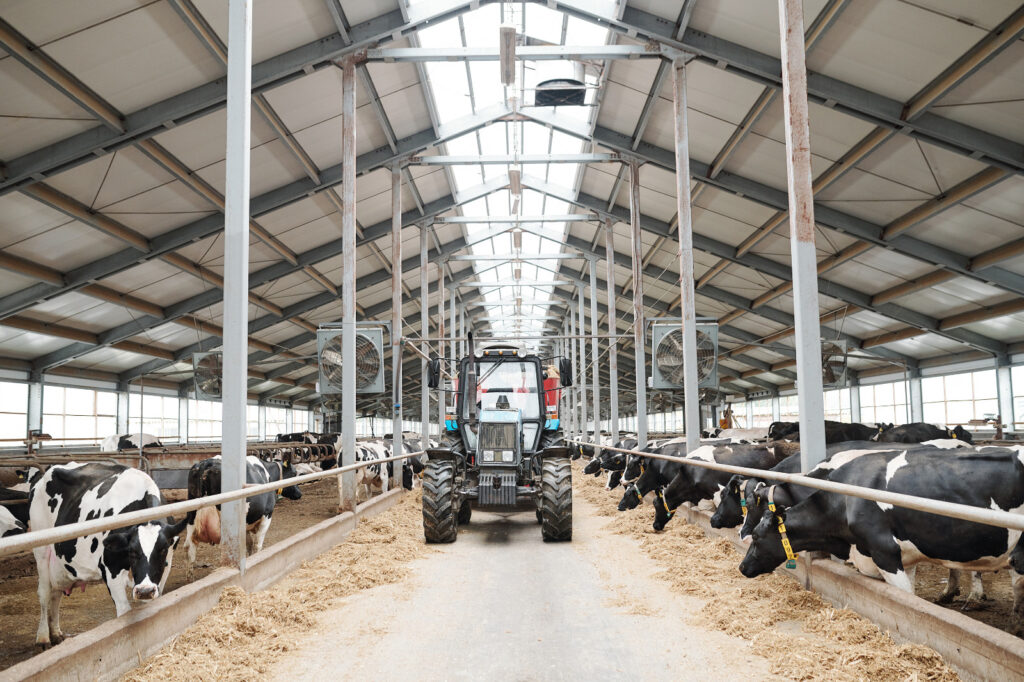
Steel cow barns resist all of these, providing housing that lasts decades with minimal maintenance.
2. Natural Cooling for Dairy Efficiency
Dairy cattle produce significant body heat and moisture. A well-ventilated cow barn is essential for animal comfort and milk production.
Steel barns allow:
- Wide spans for unrestricted airflow
- Open-sided layouts
- Ridge ventilation systems
Result: Healthier cows and higher milk production.
3. Optimized Farm Layout
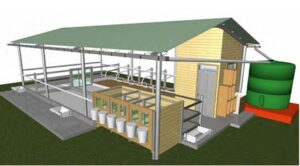
Unlike masonry or timber, steel enables column-free interiors. This allows:
- Efficient feeding lanes
- Integrated milking areas
- Dedicated calf zones
- Streamlined waste management
Strategic advantage: Operational efficiency improves across the entire dairy value chain.
Design Considerations for Farm Buildings in Uganda
Top-performing farms treat building design as a science, not guesswork. Critical considerations include:
- Orientation – align the building with prevailing winds to maximize natural ventilation
- Roof pitch – a steeper pitch promotes airflow and reduces heat buildup under the roof
- Side cladding – poultry sheds often use adjustable curtain walls; cow barns may have fully open sides
- Floor drainage – especially important for cow barns to manage slurry and maintain hygiene
- Feed and water systems – the building design should accommodate automated or semi-automated feeding and watering
- Access – vehicle access for feed delivery, egg collection, or milk tankers should be planned from the start
Small design errors compound into major productivity losses.
Cost Factors for Livestock Buildings in Uganda
Steel buildings often appear more expensive initially, but that’s a misleading comparison.
Cost drivers are:
- Building size (square metres of floor area)
- Span width and clear height
- Roofing and cladding specification
- Floor type (compacted earth, concrete slab, or slotted floors)
- Accessories (curtain walls, feeding systems, drinking systems, lighting)
- Foundation requirements
- Delivery and transport costs to the farm site
Steel livestock buildings typically have a higher upfront cost than basic timber structures, but the total cost of ownership – including durability, maintenance, animal productivity, and biosecurity – strongly favours steel over a long-term performance.
Common Mistakes in Farm Building Projects
Even with the right material, poor decisions can undermine results. This includes:
- Cutting costs on ventilation design – this directly reduces animal performance and increases mortality
- Building too small for the planned herd or flock – overcrowding is a production killer
- Not planning floor drainage before construction
- Using untreated or low-quality steel that corrodes quickly in Uganda’s humid climate
- Positioning the building without considering wind direction, sun exposure, or vehicle access
Pro Tips for Commercial Farmers
- Get a professional farm layout plan before building – the building position affects everything from ventilation to logistics
- Invest in good foundations and floor drainage – these are much harder and more expensive to fix later
- Plan for expansion from day one – building additional bays is cost-effective if the original design allows for it
- Choose a fabricator experienced in agricultural buildings, not just general construction
- Consider integrating rainwater harvesting from the shed roof to supply livestock drinking water
Steel vs Timber vs Masonry: At a Glance
Before committing to a construction method, here is how steel compares against the two most common alternatives for livestock housing in East Africa:
Factor | Steel Frame | Timber | Masonry |
Construction Speed | Fast – erected on-site in weeks | Moderate | Slow – months of bricklaying |
Durability | Very high – resists termites and rot | Low – vulnerable to termites and rot in tropical climates | High walls, but timber roof trusses remain a weakness |
Ventilation Design | Fully customisable – open-span, ridge vents, curtain walls | Limited by structural walls | Limited by structural walls |
Future Expansion | Easy – add bays without disruption | Difficult | Very difficult and expensive |
Pest Resistance | Termite and rodent resistant | High risk – requires ongoing treatment | Walls resistant, roof structure vulnerable |
Total Cost of Ownership | Lower over the life of the building | Higher due to maintenance and replacement | Moderate |
Why Zenith Steel for Farm Buildings in Uganda
Zenith Steel Fabricators builds a range of agricultural steel structures including poultry sheds, cow barns, and multi-purpose farm sheds. Zenith Steel erects livestock housing designed for the specific conditions of East African farming.
Every Zenith farm building is engineered for natural ventilation, durability, and practical use – not adapted from a generic industrial shed design. The company’s experience across Kenya, Uganda, Tanzania, and the wider region means farmers benefit from designs that have been proven in similar climates and conditions.
Frequently Asked Questions
i) What size poultry shed do I need for 5,000 birds?
The required size depends on the type of birds (broilers vs layers), the housing system, and stocking density standards. As a general guide, commercial broilers require approximately 0.06 to 0.08 square metres per bird, so a 5,000-bird broiler shed would typically be around 300 to 400 square metres. Consult with an experienced fabricator for precise specifications.
ii) How long does a steel poultry shed take to build?
A standard commercial poultry shed can be erected efficiently once foundations are prepared. Project timelines are confirmed by our engineering team based on project scope, site conditions, and location. Contact Zenith Steel to discuss your project.
iii) Can steel cow barns handle Uganda’s rainy seasons?
Yes. Steel cow barns are designed with roofing that handles heavy rainfall, and proper drainage systems manage water runoff. The galvanized steel framing is specifically chosen for corrosion resistance in humid and wet conditions.
iv) Is it cheaper to build with timber or steel in Uganda?
Timber may have a lower upfront cost, but it deteriorates faster, requires more maintenance, and provides inferior ventilation and biosecurity. Over a 15 to 25-year period, steel is typically the more cost-effective choice for commercial livestock housing.
v) Can Zenith deliver to farms outside Kampala?
Yes. Zenith Steel serves Uganda. Transport costs to rural locations are factored into the project quotation.
vi) Does Zenith Steel design the barn layout, or do we need to provide plans?
Zenith Steel’s engineering team handles the full design process, from site assessment to structural drawings. Farmers and investors provide their operational requirements – herd size, functional zones, site access – and Zenith’s team develops a building solution around them.
vii) Can a steel barn be built in phases as the farm grows?
Yes. One of the key advantages of steel construction is that additional bays can be added to the existing structure as the herd expands, provided the original design allows for future extension. Planning for phased growth from day one keeps future expansion costs low.
