

Pallet Racking in DRC: Types and Uses for Mining, FMCG and Bonded Warehouses

Pallet racking in DRC answers a simple commercial question: how do you squeeze 1,500 cubic metres of throughput out of a 500 square metre warehouse footprint? The country’s logistics map is being redrawn around the copper-cobalt belt at Kolwezi and Likasi, the Kinshasa metropolitan market of roughly 18 million people, and the Matadi port choke-point that handles most of the country’s container traffic. Every one of those nodes runs on adjustable beam pallet racking. Zen Racks by Zenith Steel ship into the DRC pre-cut, hot-dip galvanised and ready to bolt up against a numbered erection drawing.

Five Rack Types We Specify for DRC Warehouses

In our DRC racking projects the SKU profile decides the rack family before the building envelope does. Five configurations cover roughly 95 per cent of the active demand:

  • Selective pallet racking – the universal default for FMCG distribution centres in Kinshasa, Lubumbashi and Goma where SKU variety is high and 100 per cent pallet face access matters. Designed and tested to BS EN 15512:2020+A1:2022, the structural code for adjustable beam pallet racking systems.
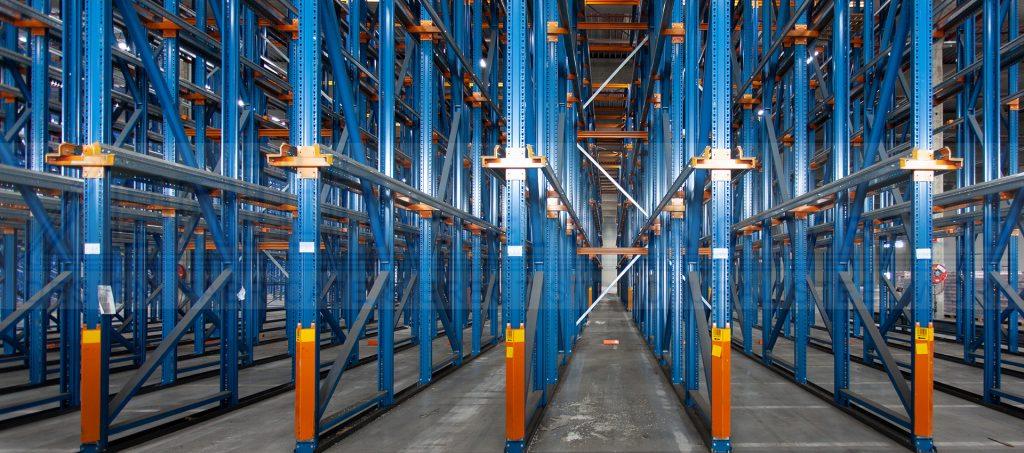
  • Drive-in racking – high-density storage for the mining sector’s homogeneous loads (drill consumables, reagents, packaged cobalt feed). Common at Kolwezi and Likasi mine-supply hubs where line-item velocity is low and pallet uniformity is high.
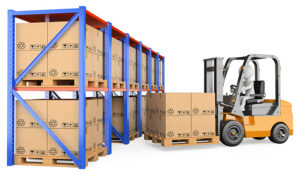
  • Cantilever racking – long-item storage for steel rebar, pipe and timber distributors on the Matadi-Kinshasa route and at the Maluku Special Economic Zone, where building-materials traders feed the Kinshasa construction market.
  • Push-back racking – LIFO high-density storage for FMCG operators such as the Bralima and Bracongo brewery distribution chains, where SKU count is moderate and dispatch lane efficiency is the priority.
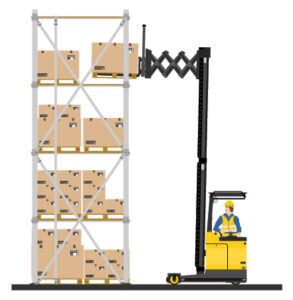
  • Heavy-duty mezzanine racking – vertical expansion for Kinshasa’s premium-priced industrial land along the Boulevard Lumumba and the Maluku approach, paired with a stair tower, kick plate and forklift gate to a published live load.

For a side-by-side breakdown of those configurations on a Nairobi reference build, see our Kenya pallet racking types and applications guide. The DRC angle in this post is the country-specific spec: corridor logistics, coating, anchorage and customs paperwork. Mining-operations use cases sit on our DRC warehouse and racking for mining and industrial operations post.

Zen Racks selective pallet racking bay being staged for a pallet racking DRC project

Why Zen Racks Suit the DRC Climate and Mining Belt

Two environmental loads define the spec we ship. Kinshasa humidity averages above 75 per cent year-round and the wet season runs October to May; without a galvanised baseplate the upright skirt corrodes through within four years on a concrete slab that holds standing water. Along the Lubumbashi-Kasumbalesa corridor, copper-belt road dust loads the structure with abrasive fines that strip thin painted finishes inside a season. Zen Racks ship hot-dip galvanised to ISO 1461 by default, with a powder-coat top layer available for premium FMCG warehouses where brand-audit visitors care about appearance.

Loading is the other DRC-specific addition. Our standard Zen Racks beam level is rated to 2,500 kg uniformly distributed for the mining-supply duty, tested against the dynamic loading rules of BS EN 15512:2020+A1:2022 rather than a catalogue figure. Every system ships with a load chart at the aisle entry and a bolted base-plate template marked for the slab anchor. Upright protectors and end-of-row guards are reinforced for class-IV forklift impact, with replaceable skirts at every aisle entry, which has cut upright write-offs on our Lubumbashi sites since the protector spec was upgraded in 2024.

Seismic anchoring is not the headline issue some imported specifications suggest. The southern DRC, including Lubumbashi and the wider Katanga plateau, sits in the low-hazard zone of the DRC seismic hazard mapping published on ThinkHazard; the active rift seismicity sits north and east, around Lake Kivu, Lake Tanganyika and the Ruwenzori range. Standard anchorage with M16 mechanical or chemical anchors into a sound 200 mm slab is sufficient for the copper belt; we add an enhanced anchorage detail only where the client’s site is mapped within 50 km of an active rift fault.

Shipping, Customs and Bolt-Up on a DRC Site

Lead time from a confirmed Zen Racks purchase order to a bolt-ready delivery at site runs 8 to 10 weeks ex-Nairobi. For Lubumbashi and the copper belt, our standard transit is overland Nairobi – Namanga – Dar es Salaam – Tunduma – Kapiri Mposhi – Kasumbalesa – Lubumbashi, with the Kasumbalesa border crossing handling the bulk of southern DRC freight. For Kinshasa and Matadi orders, sea freight to the port of Matadi via Dar es Salaam or Durban is the standard path; the Lobito corridor through Angola is becoming a credible alternative for return cargo but is not yet our default outbound route for racking.

DRC customs paperwork carries a specific list. Every shipment leaves with a Bureau Veritas BIVAC certificate of inspection issued before loading, the OGEFREM FERI maritime freight document for sea legs, and the OCC (Office Congolais de Contrôle) declaration prepared in French for clearance at the port or border. Our shipping documents are issued bilingually to match the OFIDA and OGEFREM requirements that all import dossiers be in French. On a typical Lubumbashi delivery, clearance at Kasumbalesa runs 5 to 10 working days; for Matadi-bound containers we budget 14 to 21 days for the port clearance window.

On-site bolt-up of a 1,000-pallet selective system runs 7 to 10 days for a four-person crew working from the numbered erection drawing. We send a Zenith Steel erection supervisor for systems above 2,000 pallet positions, high-bay builds over 9 metres, or any drive-in or push-back configuration. Each delivery includes the mill certificate trail, the galvanising film-thickness log, the load chart, the slab anchor template and the maintenance and inspection schedule for the safety officer’s file.

Zen Racks upright frames staged for assembly on a pallet racking DRC mining-supply warehouse

In our DRC racking projects, four questions decide whether a Zen Racks design lands cleanly: the SKU profile and the matching rack family; the duty class for forklift impact and beam loading against BS EN 15512:2020+A1:2022; the corridor (Lubumbashi, Kinshasa or Matadi) and the customs file matched to OCC, OGEFREM and BIVAC; and the anchorage detail against the southern DRC low-hazard seismic case. Zen Racks ship with each answered in writing. Our pallet racks and warehouse storage product page sets out the Zen Racks family; the contact page reaches our DRC desk and the project quotation form takes the SKU and footprint detail. For adjacent DRC work, see our steel multi-purpose sheds for remote DRC sites and our water storage for large-scale Congo projects.

Frequently Asked Questions

Can Zen Racks handle forklift impact loads in DRC mining warehouses?

Yes. Upright frames carry class-IV impact-resistant column protectors at every aisle entry, with replaceable skirts that bolt out without dismantling the bay. The beam-to-upright connector is tested for dynamic load reversals to the rules of BS EN 15512:2020+A1:2022 rather than to a catalogue figure.

Do Zen Racks include seismic anchoring for the Lubumbashi region?

Standard anchorage with M16 anchors into a sound 200 mm slab is sufficient for Lubumbashi and the wider southern DRC copper belt, which sits in the low-hazard seismic zone on the published DRC hazard mapping. Enhanced anchorage is engineered on request for sites within 50 km of an active rift fault, mainly the eastern provinces around Lake Kivu and Lake Tanganyika.

What is the lead time from order to bolt-up on a DRC site?

Eight to ten weeks ex-Nairobi for a standard Zen Racks system, including hot-dip galvanising and shop coating. Overland transit to Lubumbashi via the Dar es Salaam, Tunduma, Kapiri Mposhi and Kasumbalesa route runs 14 to 21 days subject to border clearance, with sea routing to Matadi for Kinshasa and western DRC orders.

Does Zenith Steel handle DRC customs paperwork for racking shipments?

Yes. Every Zen Racks shipment leaves with a Bureau Veritas BIVAC certificate of inspection, the OGEFREM FERI maritime document for sea legs, and the OCC declaration prepared in French to match OFIDA and OGEFREM requirements. The dossier is issued bilingually so the client’s customs broker can clear at Kasumbalesa, Matadi or the airport free zone without rework.

Leave a Reply

Your email address will not be published. Required fields are marked *