

Rwanda’s construction pipeline has not paused since Vision 2050 was published. The Kigali Innovation City masterplan, the Bugesera International Airport build, Special Economic Zone expansions in Kigali, Huye and Musanze, and commercial high-rises along the KN-3 corridor all rely on steel framing. The more vertical Kigali builds, the more exposed it becomes to the cost of a single weld failure or rigging mistake. In our work on Kigali projects, we have seen how a missed mill certificate or a rushed lift plan can delay hand-over by months.
The structural steel safety standards in Rwanda for contractors must fall into three groups:
- Statutory law (Labour Law 66/2018 plus the urban planning law)
- Technical codes (BS EN, ISO, AWS)
- Product certification through RSB
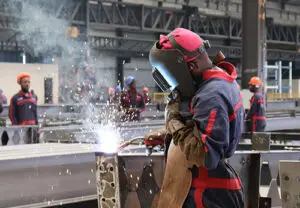
Each group has its own paperwork and its own inspection moment, so projects benefit from a fabricator who folds them into one delivery file. From our Rwanda notes, this approach saves a working week on the inspector’s queue.
The legal backbone is twofold. Workplace safety on every Rwandan site falls under the Ministry of Public Service and Labour (MIFOTRA) through Labour Law No. 66/2018 and its Regulations on Occupational Safety and Health in Construction. Building approvals and on-site building control sit with the Rwanda Housing Authority (RHA) under the Ministry of Infrastructure. For the steel itself, the operative technical codes are BS EN 1993 (Eurocode 3), ISO 9001, AWS D1.1, and hot-dip galvanising to ISO 1461. These are the same anchors Zenith Steel certifies to on every Rwanda contract, in line with our structural steelworks practice for commercial and industrial projects.
Climate adds a further load case. Kigali sits at roughly 1,567 metres above sea level, so wind loading dominates over seismic across most of the country. The long rainy season also drives a hard rule on corrosion protection: every Rwanda fabrication ships hot-dip galvanized or zinc-rich epoxy coated by default, with thicker plate where projects sit close to the Akagera or Nyabarongo wetlands.
Code references are only as useful as the workshop discipline behind them. On every Rwanda contract, our team runs six checkpoints before a beam ever leaves the workshop:
- Mill test certificates traceable to the original source
- Tekla model clash check, so safety is designed in rather than retrofitted on site
- Welder qualification under AWS D1.1 and EN ISO 9606
- Hot-dip galvanizing to ISO 1461 or a zinc-rich epoxy coating system
- Pre-shipment QA dimensional report cross-checked against the Tekla cut list
- Site-erection method statement signed by the Rwanda-side resident engineer
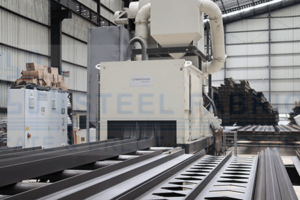
Site PPE and Lift Planning in Kigali
PPE on a Rwandan site includes full-body fall-arrest harnesses with life-lines anchored to the steel, hard hats with chin strap (mandatory above 1.8 metres), and steel-toe boots rated for hot-work. Every crane lift over 5 tonnes carries a documented lift plan signed off by both the Zenith rigger and the client’s safety officer. MIFOTRA inspectors and RHA building-control officers can request that file at any unannounced visit. For multi-storey work, we co-ordinate the lift sequence with the multi-storey buildings programme so column splices and beam landings line up with the crane’s load chart.
The Rwanda Standards Board (RSB) is the national standards body and the gatekeeper for steel quality entering the country. RSB adopts and aligns regional and international standards through its civil engineering and metallurgy technical committees, so the BS EN 10025 hot-rolled section grades and ISO 1461 galvanising film thicknesses we use map cleanly onto RSB-recognised references. Every load Zenith Steel sends to Rwanda travels with a delivery dossier built for the inspector at the gate: mill certificates, fabrication QA report, weld map, dimensional report, and HDG film-thickness readings. The dossier is laid out in inspector order, so any RSB or RHA officer can pull the document they want in under sixty seconds.
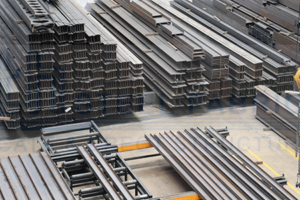
Three field details earn the most attention from Rwandan inspectors. First, hot-dip galvanising film thickness on every column foot, recorded with a calibrated coating-thickness gauge at three points per member. Second, weld procedure specifications matched to welder qualification cards, travelling as scanned copies in the dossier. Third, torque values on bolted connections, logged at 100% witness for the primary frame and 25% sample for secondary steel. Each is a fail-stop item under the structural steel safety standards Rwanda has tightened since the 2018 labour law.
For our Rwanda cluster work, this discipline also feeds adjacent projects: the industrial warehousing line for Kigali’s Special Economic Zones, the steel factories and production facilities for Rwandan manufacturers, and the cow barns and agricultural steel sheds for Rwanda’s farming sector all run off the same certification spine.